

I’ve long admired Harris Kupperman, the founder of Praetorian Capital, for his ability to cut through noise and spot big-picture themes before they become consensus.
Harris just released his thoughts on markets, AI and his positions in his Q2 investor letter, which I’m happy to share with my subscribers.

In his most recent letter, Harris talks about the surprising market reaction to the Middle East war, the fund’s recent underperformance, and why he still believes the global economy remains trapped in a system of economic “Feudalism.”
He also explains why the fund missed the AI boom, where he now sees second-order opportunities, and how he is positioning for a potential slowdown in AI spending and a broader market decline (photos added by QTR for emphasis).
Markets Are Complex
Six months ago, if you had asked me what would happen during a Mid-East war, I’d have guessed that gold and US Treasuries would rally on a global flight to safety. Nope, they declined—markets are complex. I would have guessed that if we drew more than a billion barrels of global commercial inventories, oil would scream out of control. Nope, it’s effectively unchanged since the conflict began—markets are complex. If you asked me how our core book would do, I’d have told you that we’d likely outperform given our heavy weighting towards volatility and inflation beneficiaries. Nope, we’ve given up ground—markets are complex.
I’ve always been of the view that in the short run, markets can trade at literally any price level. Throughout my career, I have repeatedly been humbled by securities that have exceeded even my wildest expectations of where they could trade. While the overall decline in our portfolio was quite moderate by this Fund’s standards, I remain humbled, as I really would have expected our book to have performed better in a Mid-East war that saw increased volatility and inflation readings. Markets are complex.
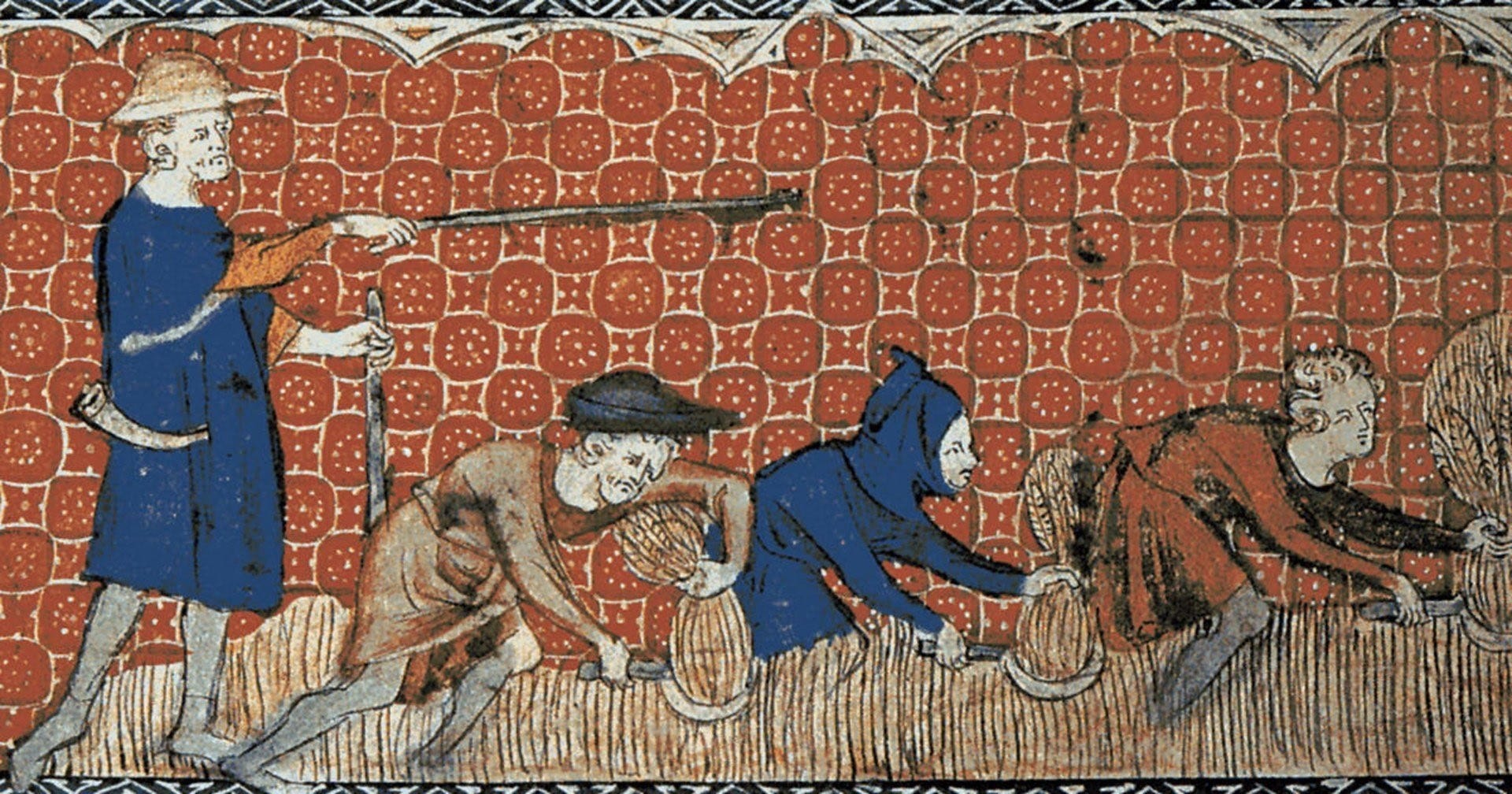
It’s worth taking a step back and trying to frame what happened. As you know, I’m firmly of the view that we’re in a Feudalist economic system. Rather than rehash my view of Feudalism again, just think of it this way: the oligarchs of foreign countries underpay their workers to produce products for our citizens to consume. Their resulting dollar earnings are then recycled into US Dollar risk assets, leading our currency and assets to be overvalued, our businesses unable to compete globally outside of a handful of sectors like technology, and our economy effectively hollowed out. Our overpriced assets then allow increased consumption, and the cycle begins anew. This ecosystem benefits the top few percent of families in both nations, while impoverishing everyone else. Economic Feudalism.
When Hormuz was closed, some unique trends happened, briefly alleviating Feudalism globally. As Asian Mercantilists were unable to procure affordable energy products, they chose to ration supply to their industries. Products that had been subsidized by cheap loans and labor for decades suddenly traded up to free-market levels, and US industries suddenly became competitive again. There was then a wave of hiring across dozens of US industries, as Asia was unable to produce competing products.
You could say that the Iranians undertook the anti-involution campaign that China keeps talking about, yet never seems to pursue. The global economy upticked dramatically, and the global recession took a pause, as the chains of Feudalism were briefly broken. The result was that many of our portfolio’strends reversed—we’re long Feudalism. Many years ago, they used to talk about Risk-on or Risk-off trades. I think in terms of Feudalism and Run-It-Hot. Main Street actually had a few good months due to the war, but our book is not positioned for that. Now with the war seemingly trailing off (or maybe not?), our positions are beginning to bounce back.
For better or worse (mostly worse), Feudalism is the dominant mindset amongst elites globally—in many ways, our domestic economic policies are simply a mirror reflection of our trading partners’ imbalances. We all suffer together economically, though it is quite good for those at the top. Last April, Trump tried to put up trade barriers and reverse this situation, but to undo Feudalism, US equities would decline dramatically. As I like to remind people, during the Trade War, Main Street won for 6 days. Trump couldn’t even take that much pain. Hence my confidence in Feudalism accelerating, until both sides make a political decision to undo it. But why would they?
Everyone at the top is winning—hence it will continue, with brief pauses along the way. In our portfolio, we continue to double down on Feudalism (though we do have a large refinery position to hedge this exposure, and it hedged beautifully), while focusing on eliminating positions that are tied to real GDP growth. The most recent quarter was a short-lived speed bump in this process, but even the Iranians have a stock market—maybe they also prefer Feudalism?
Thoughts on the Event-Driven Book
Ever since Trump returned to power, our Event-Driven book (ED) has underperformed my expectations. I’m used to a world where securities trend, and I can use very tight risk profiles to manage the exposures within this book. The staccato nature of Trump tweets leads to an extreme level of disjointed market action, which doesn’t really work well with many of our strategies.
During the second quarter, we gave back the majority of the gains from the first quarter, before I chose to cut off the ED book for the summer (risk discipline says that when you’re taking losses, you stop what you’re doing). We’re roughly flat for the year on the ED book, which is annoying for something that’s almost always been a profit center. While it hasn’t caused harm, the recent performance of the ED book is certainly not what I’d normally underwrite in our Fund’s return profile, especially as we’ve now had seven consecutive years where the ED book has been additive to returns.
The book did poorly during Trump’s first term, only to excel when events moved beyond his control during COVID. When I reboot the book during the fall, I plan to target more single-stock situations, where we’ve done well over the past year and change, avoiding macro-type situations, where Trump frequently creates discontinuous markets. This is quite similar to what worked during the last Trump Presidency. Unfortunately, sometimes I need to relearn the old lessons.
Let’s Talk AI
Clearly, AI has been the biggest market trend for the past few years. I’m embarrassed to say that not only did we miss participating, but we actively sought out ways to fade it. To date, I remain of the view that most of the capital invested in this sector will be impaired. I think of AI much like other massive multi-year capex programs over the past two centuries: the canals, the railroads, and the fiber buildout. Great expenditures of capital produced only bankruptcy and loss for those who spent the capital.
When looking at AI, I frequently think of the Panama Canal, which bankrupted the French, before getting completed by the US government. To date, it is unclear if the canal has even earned its construction cost in inflation-adjusted terms, much less a positive return on capital, and that is for one of the most strategic and monopolistic assets in the world.
On the other hand, the railroads and the fiber buildouts suffered from endless competition, overcapacity and high fixed costs, necessitating endless discounts to gain share. They’ve been even worse investments. At the same time, they’ve been great value creators for those who were adjacent. As I look around my office, I see many items that transited the Panama Canal or rode the rails. This communication is likely reaching you through fiber that was laid down by a now-bankrupted telecom. We are all beneficiaries of this malinvestment, while the shareholders who funded it have suffered the consequences. Unfortunately, I used my history lens to contemplate AI, rather than join in the orgy of speculation.

If you think of the railroad buildout, two types of players won. On one hand, you have Carnegie, Frick and the other suppliers to the railroad buildout. On the other hand, you have Rockefeller and the agriculturalists who played the railroads off each other to procure cheap transport. We should have owned the suppliers to AI, which have been phenomenal trades.
Unfortunately, I kept thinking that eventually adult supervision would step in and end this overspending. Why would asset-light tech companies pivot to become asset-heavy capital immolators? No one wants to be a shale company. In that vein, I was wrong—or at least early in seeing AI for what it is. The buildout continues, even though there’s a dawning realization that the economics are brutally awful (much as I intimated almost a year ago). It has gone on for three years longer than I ever thought possible, but I now think that we’re nearing a crossroads in terms of the ability to continue growing capex spend at the current rate—the rate of change in spend is indeed inflecting lower.
As a result, those funds chasing the AI bottlenecks will be painfully surprised when new supply magically comes online, just as growth slows, in my opinion. It was an amazing run (which we missed). However, I think these cyclical industries will ultimately return to their roots and be cyclical—crushing the hopes and dreams of shareholders. I have feared this moment, and missed out on the AI capex plays—much to our detriment, as they’ve been one of the strongest macro trends in a market that has been surprisingly devoid of deep and liquid trends to play over the past few years.
Having missed out on being Carnegie, I want to focus on being Rockefeller. What industries will use AI to dramatically reduce their costs? Who will find ways to grow revenue by utilizing AI? We have some interesting ideas, and I’m sure we’ll think of more. Taking it a bit further along in this process, if corporates become focused on using AI to reduce headcount, who else benefits as millions of workers need to reskill?
We’ve purchased shares of the two largest technical colleges in the US (more below in the positions section), as I believe that they’ll be dramatic beneficiaries of this reskilling trend. I’m sure there are other ancillary trends for us to try and capture, and we’re actively seeking them out as AI continues to evolve.

We’re decidedly an anti-tech fund. We watch tech as it drives trends, but we rarely invest in tech itself—instead I want to seek out the second-order beneficiaries, as tech is a really tough place to make money. The corollary is that in a market that’s driven by a handful of tech names, we’re likely to lag on the performance side.
In a complete AI mania, as we’ve just witnessed, I’d expect us to lag even worse, hopefully catching up through outperformance on the flip side as AI names surrender their gains. It’s too soon to tell if the bubble has reached its peak, but for the first time since it began, I am recognizing a growing realization that much of the capital invested in AI has been squandered. If that becomes the accepted wisdom, I’d expect that the spending will slow, followed by the deluge.
It’s worth remembering that the AI buildout represents between 2 and 3% of GDP before including the multiplier effects inherent in any massive capex program. The Wealth Effect is many multiples larger. I feel fully justified in saying that this bubble now supports in excess of 10% of US GDP, with many other countries also benefitting mightily.
I don’t mince words when I say that if this goes in reverse, it will be a mess. The fiber buildout within the internet bubble was a little more than 1% of US GDP, with a far smaller Wealth Effect. Even then, the unwind led to a mild recession, which coincidentally caused the S&P to decline by 49% and the NASDAQ to decline by 78%. I think the AI unwind could lead to a deeper recession and a nasty decline from much higher starting valuations.
In fact, it’s so scary to contemplate that I expect the government to step in and halt the decline. This will officially kick off phase II of “Project Zimbabwe.”
Positioning
In the Q1/26 letter, I noted that many of our names were breaking out to new highs, and that experience taught me that I should expect them to continue to trend higher—especially as I expected that many of them would report strong calendar Q1 earnings.
While I was correct on the second part of this view (with few exceptions, earnings were quite strong), I was wrong about new highs. You could say that a quick pause in Feudalism was responsible, as we mostly saw a bifurcation in performance, and our only “Run-It-Hot” sector, refiners, powered higher.
Unfortunately, this was offset by pullbacks in our Precious Metals basket (somehow war is bad for precious metals?) and our Emerging Markets basket, as war is potentially bad for them. Fortunately, Marex (MRX – USA) powered higher on elevated volatility, though our Event-Driven book gave back prior gains. In all, it was an uneventful quarter compared to many others, though frustrating all the same, as things seemed like they were setting up to blast off.
With the war seemingly on-again/off-again, depending on what middle-of-the-night posting Trump sends out on any given day, I remain hopeful that prior trends in motion can resume their upwards motion.
My Own Exposure to This Fund
I would never ask you to invest in this Fund, if I didn’t have the vast majority of my own capital also invested in this Fund. Due to an accident of history, for the past 8 years, I have had a large personal investment in a publicly traded company, Mongolia Growth Group (MGG) that I couldn’t figure out what to do with, as I couldn’t figure out how to liquidate the assets in Mongolia.
In 2025 after much toil and heartache, we started the process of returning capital to shareholders and during May of 2026, that process was completed. I personally received a large cash distribution, and invested almost all of it into the Fund as of July 1, excluding a portion that was used to pay off a loan tied to the office building that our Fund operates out of (you could say that paying off this loan was an investment in strengthening our Fund’s management company).
Subsequent to these transactions, my only investments outside of the fund are 50 Class B shares of Berkshire Hathaway (BRK/B – USA)—the legacy of a single share I bought while in college, so that I could attend the annual meetings, and my residual shares of MGG. At this point, MGG has a small pool of capital and is seeking to merge with some other company. Should we find an attractive merger partner, I will likely step down as Chairman of the company, ending a 15-year journey in public markets—I have already stepped down as CEO. Hopefully, this will complete a process to concentrate all of my personal investments through this fund.
I want you to know that there are positives and negatives to having the fund’s CIO with such a focused personal investment. On one side, I’m rather highly incentivized to get it right. On the other side, I’m likely to be rather risk-adverse. Unlike anyone else in this fund, I do not have other investments to balance out my investment in this fund, and I literally cannot afford to get it wrong. This risk discipline can cut both ways, hence why I flag it. However, I want you to know that after many years, I’ve finally concentrated all of my personal investments into this fund.