

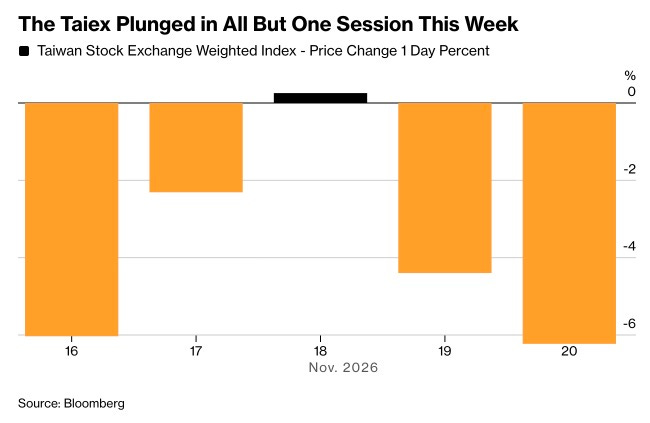
As global markets reel from a violent selloff in technology and AI stocks, Taiwan is tightening restrictions on short selling in a desperate attempt to stabilize its stock market. This has started chatter about whether similar measures will again be taken in the U.S. if our markets continue to plunge. I argue that such action is not only pointless, but actually counterintuitive. But, the government loves a boogeyman.
Following the Taiex’s worst weekly decline in 35 years, Taiwanese regulators announced a blanket ban on short selling below the previous day’s closing price, covering both margin short sales and borrowed shares this weekend.
The restrictions take effect tomorrow, November 23, and mark the third round of short-selling curbs this month. Meanwhile, Taiwan’s $15 billion National Financial Stabilization Fund has already begun buying stocks in an effort to restore investor confidence.
It seems that whenever markets start falling hard enough, governments inevitably begin looking for someone to blame. It’s never the speculative fervor on the way up that encouraged the excess and pornographic valuations. It’s always the market’s favorite scapegoat for shitty investment decisions: the short seller.
The logic is always the same: stocks are falling, short sellers are betting against them, and therefore short sellers must be responsible for the decline. Ban the short sellers, remove the downward pressure, and confidence will magically return.
Except that’s not how markets work. We have decades of evidence that say otherwise.
One of the most important things to understand about short-selling bans is when governments implement them. They don’t usually happen after markets have stabilized, valuations have reset, and the underlying economic problems have been resolved. They happen when policymakers are panicking.
During the 2008 financial crisis, the SEC temporarily banned short selling in 799 financial stocks on September 19, ostensibly to restore confidence and prevent disorderly trading. It didn’t exactly fix the underlying problem. The ban remained in effect until October 8, and over those 14 trading days, financial stocks fell more than 12%, according to a subsequent New York Fed study.
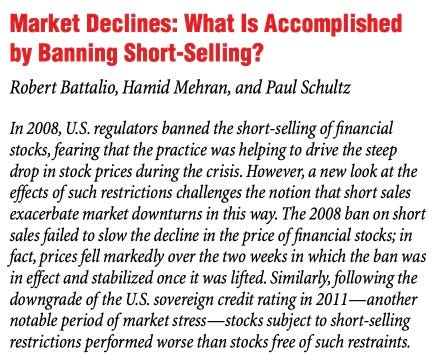
The S&P 500 wouldn’t reach its ultimate crisis low until March 2009, nearly six months later.
Morgan Stanley was an especially striking example: despite short interest in the stock collapsing from 45.3 million shares on September 15 to just 18.4 million by September 30, its share price still plunged roughly 40% over that same period. By October 6–8, with the ban still in place, the S&P 500 financial sector had fallen another 17.8% in just three trading sessions.
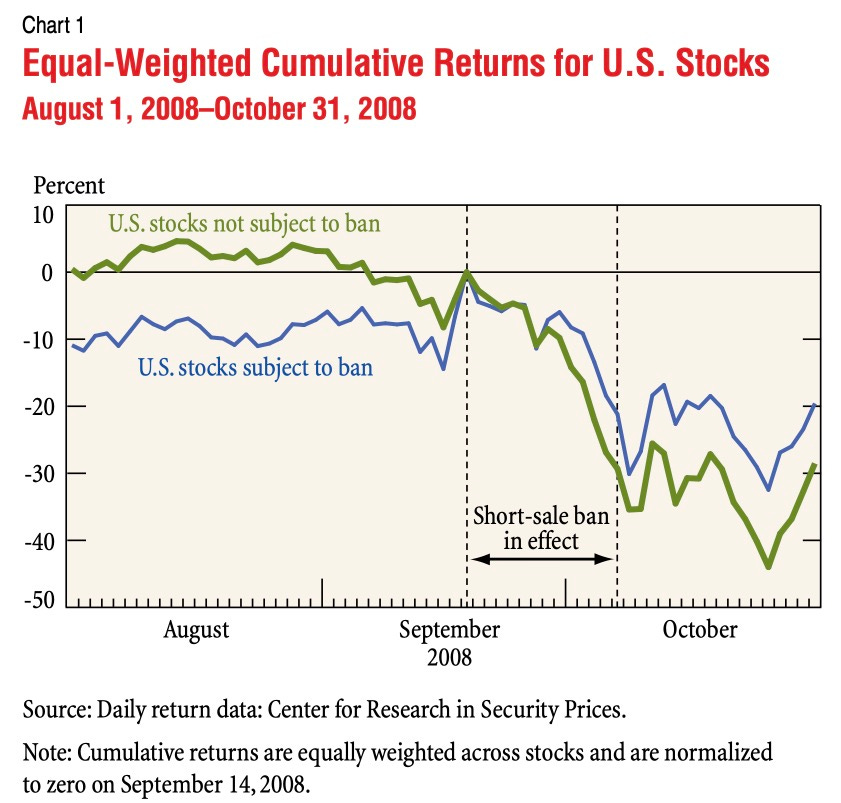
And when the restrictions finally expired, the selling continued: on October 9, Morgan Stanley plunged another 26%, Bank of America fell 11%, and the broader financial sector dropped 11.7% in a single session. The intervention had done little to restore confidence, much less repair underlying balance sheets.
Subsequent research from the New York Fed found that the restrictions not only failed to arrest the decline but also reduced market liquidity and increased trading costs across equity and options markets by more than $1 billion.
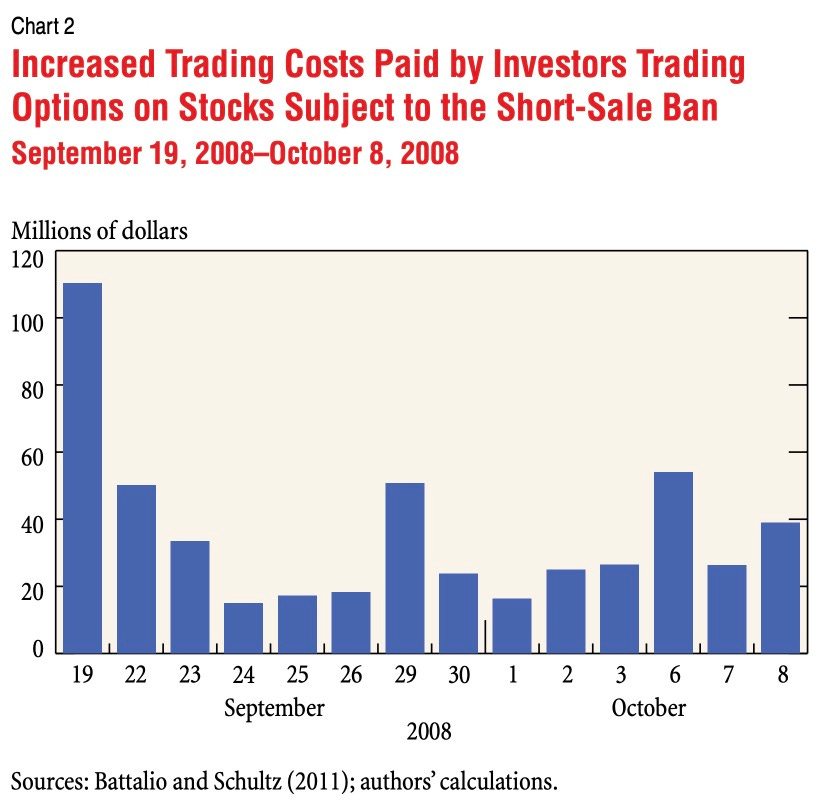
The lesson was straightforward: banning short sellers doesn’t eliminate the fundamental reasons investors want to sell. It merely interferes with price discovery while allowing policymakers to pretend they’re addressing the crisis.
In November 2023, South Korea imposed a sweeping ban on short selling following months of market weakness and concerns about illegal trading practices. The restrictions didn’t resolve the country’s underlying economic or corporate governance challenges. The ban remained in place until March 2025.
And during the COVID crash in March 2020, several European countries imposed short-selling restrictions after markets had already suffered enormous losses. Those interventions didn’t cure the pandemic, reopen businesses, or eliminate the economic uncertainty driving the selloff.
The pattern shows me something consistent.