

The CME Comex is the Exchange where futures are traded for gold, silver, and other commodities. The CME also allows futures buyers to turn their contracts into physical metal through delivery. You can find more detail on the CME here (e.g., vault types, major/minor months, delivery explanation, historical data, etc.).
The data below looks at contract delivery where the ownership of physical metal changes hands within CME vaults. It also shows data that details the movement of metal in and out of CME vaults. It is very possible that if there is a run on the dollar, and a flight into gold, this is the data that will show early warning signs.
Gold
Despite the fall in gold prices this month, this March saw the highest deliveries for a minor month since last May. Last May was right near the tariff uncertainty where there were massive spreads in the price creating an arbitrage opportunity. This had gold traveling from London to New York and pushing up vault volumes. Deliveries have been strong ever since.
The 14k contracts delivered would have also been considered quite strong when looking at any period prior to the arbitrage dislocation last year. Deliveries averaged closer to 5k prior to 2025. While the price did fall in March, some of which could be due to Turkey dumping a chunk of reserves, demand for physical metal remains quite robust.
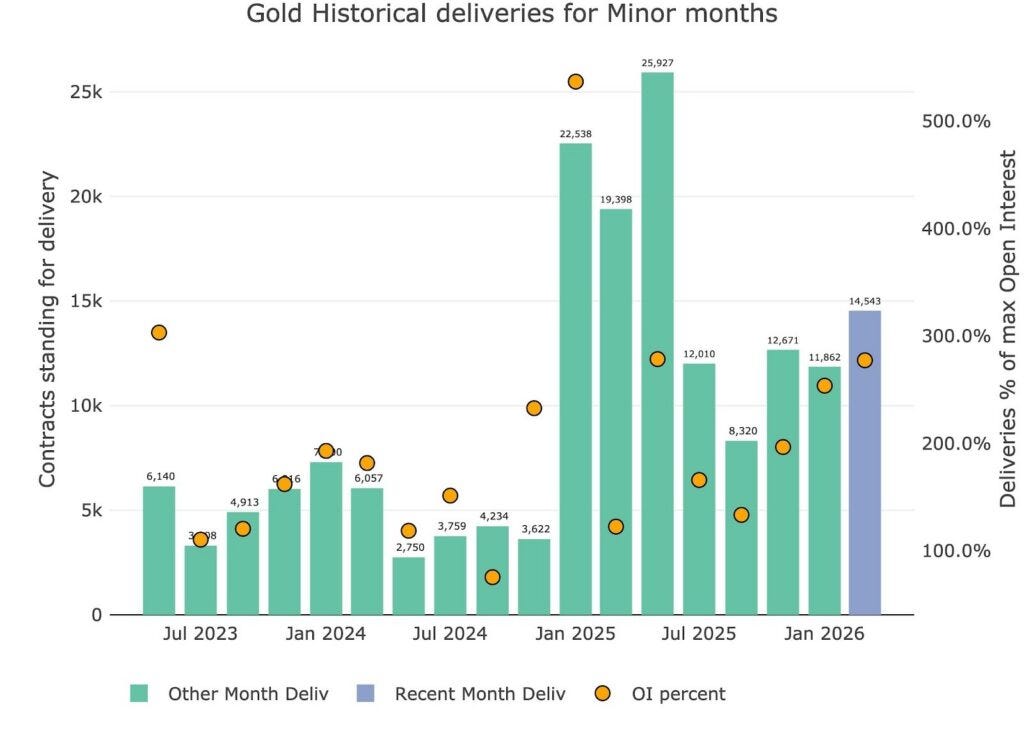
Figure: 1 Recent like-month delivery volume
Another interesting data point is the total notional delivered. The chart below shows the dollar amount of deliveries for gold specific to the month of March. While this March had delivery volumes almost 5k contracts lower than last March, from a dollar perspective it actually exceeded last March by a wide margin ($2.1B or 38%).
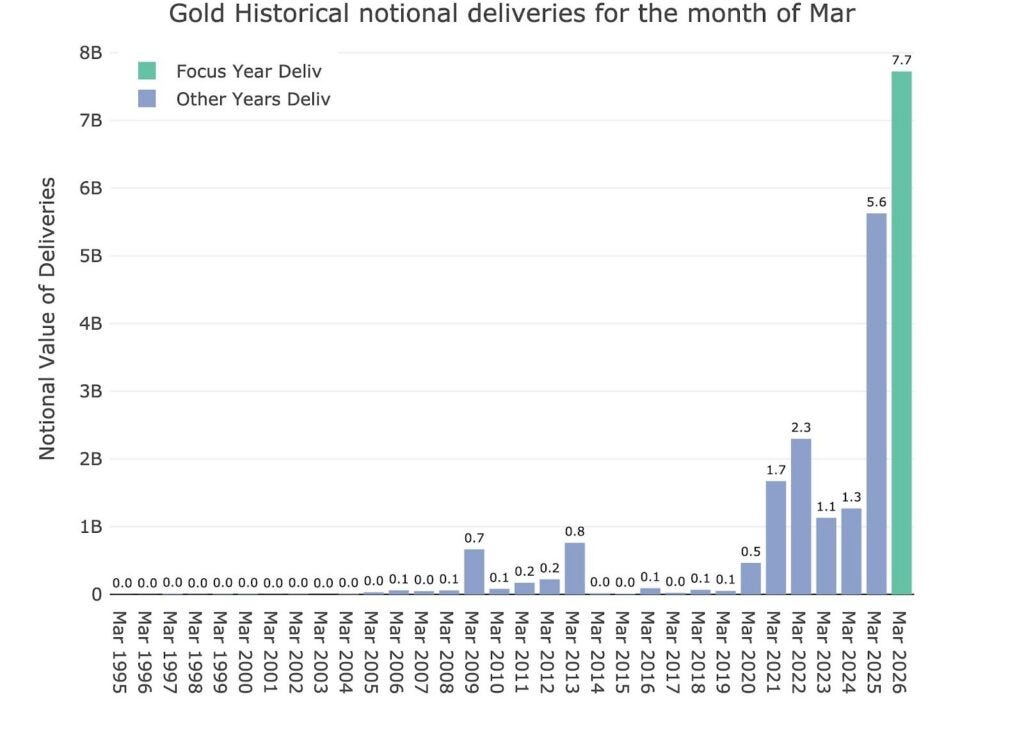
Figure: 2 Notional Deliveries
Net new contracts (contracts that open and settle for immediate delivery) shows another clue to the strength. Nearly 12k contracts were opened and delivered immediately. This made up 82% of total delivery volume. It trailed only last January and May. This means that while the paper price of metal has been under pressure all month, physical demand remained very strong.
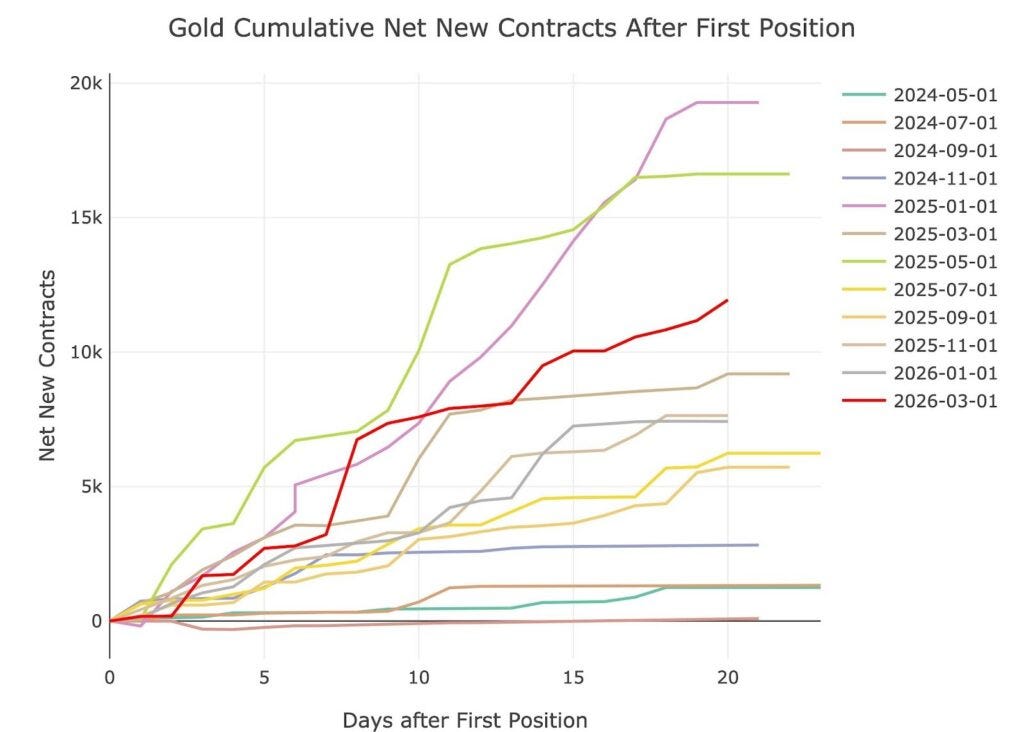
Figure: 3 Cumulative Net New Contracts
Perhaps the most important data point is the actual metal leaving Comex vaults. When metal is “delivered” it does not mean it’s leaving the Comex. It means that Registered ownership is moving from one party to another. When the metal leaves the vault, that is where things get interesting.
As shown, last year saw a major influx as the arbitrage trade took hold, but that metal has been flowing back out. In the latest month, Registered metal continued to see a move down. This metal did not flow into Eligible, which stayed relatively flat. Instead, the metal left the vault entirely. At the same time, Eligible also saw continuous and slow outflows.
This all fits the story above, a buyer throughout the month opening contracts, taking immediate delivery, and then removing it from the vaults. This is a slow, methodical buyer who is taking advantage of the price dip.
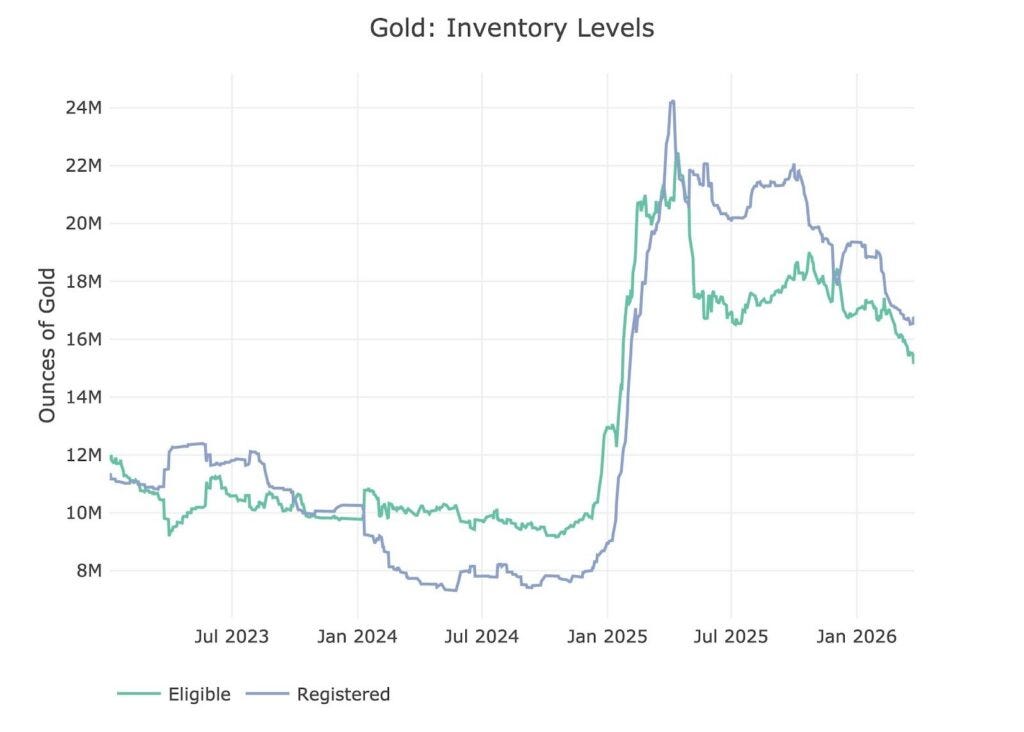
Figure: 4 Inventory Data
Looking ahead to the April delivery period (a major month for gold), we see a contract that is hovering near the lower end of the average.
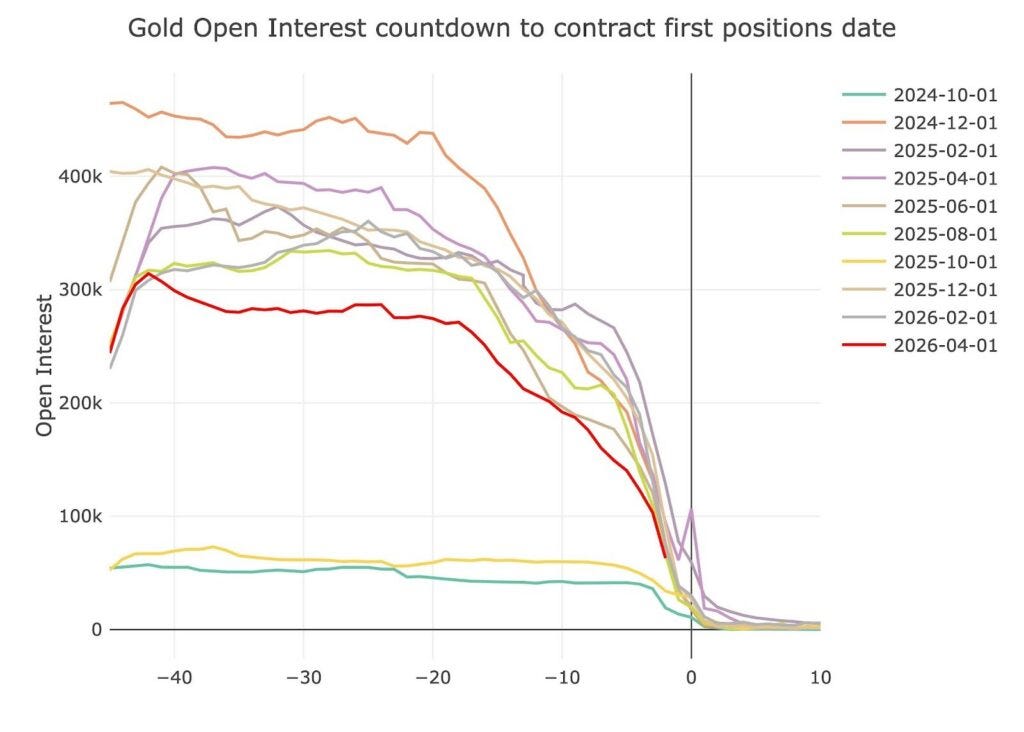
Figure: 5 Open Interest Countdown
With the recent drop in inventory, the open interest relative to physical stocks is in trend with the recent months.
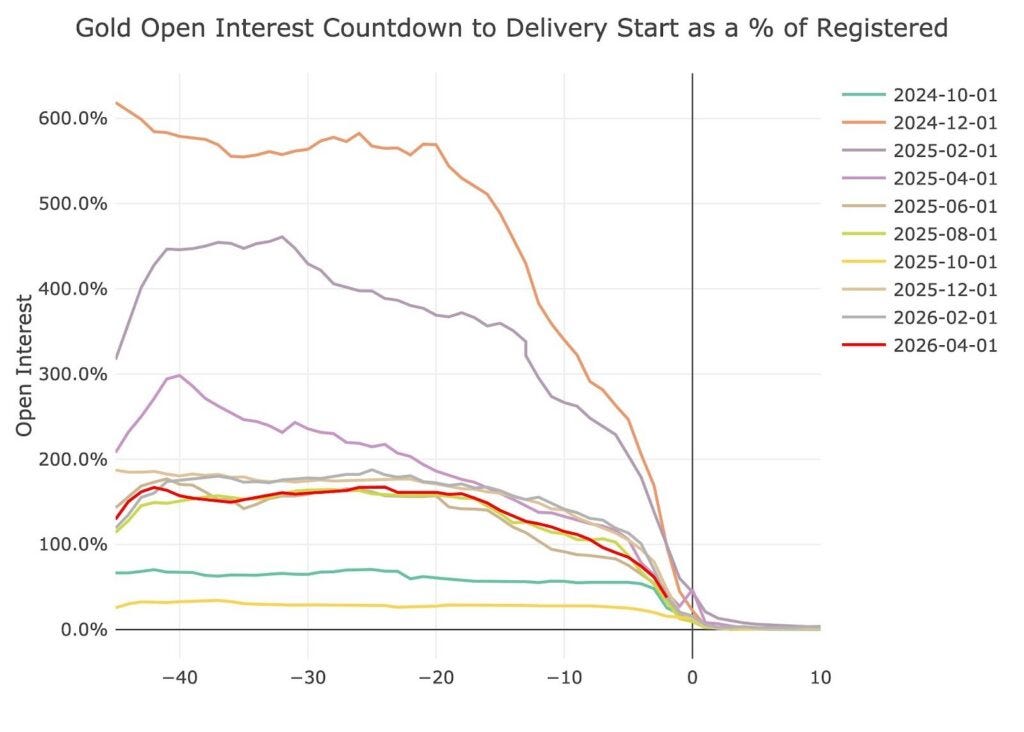
Figure: 6 Open Interest Countdown Percent
Bottom line, March saw continued strength in delivery volume, a decent amount of physical metal left the vault entirely, and now the Comex has to deal with a major month which could see billions more delivered and leaving the vault. Once physical inventories get low enough, the ability for paper shorts to push the price down will be nearly gone.
Silver
While the gold market is showing a futures price that is getting higher above the spot rate (which caused metal to move from London to New York last year), the silver market is experiencing the opposite problem, backwardation. The spot price is above the futures price. This is actually a bigger warning sign because it highlights the pressure being put on the physical market.
Market Signal: Backwardation often signals a strong immediate demand or a supply shortage in the current spot market. The market is willing to pay a premium for the asset now, as the shortage is typically expected to resolve over the long term.
The backwardation ended on March 23rd, but it is dipping back down already. With the major price dislocations of silver between the East and West, it is unlikely that this type of backwardation will resolve anytime soon.
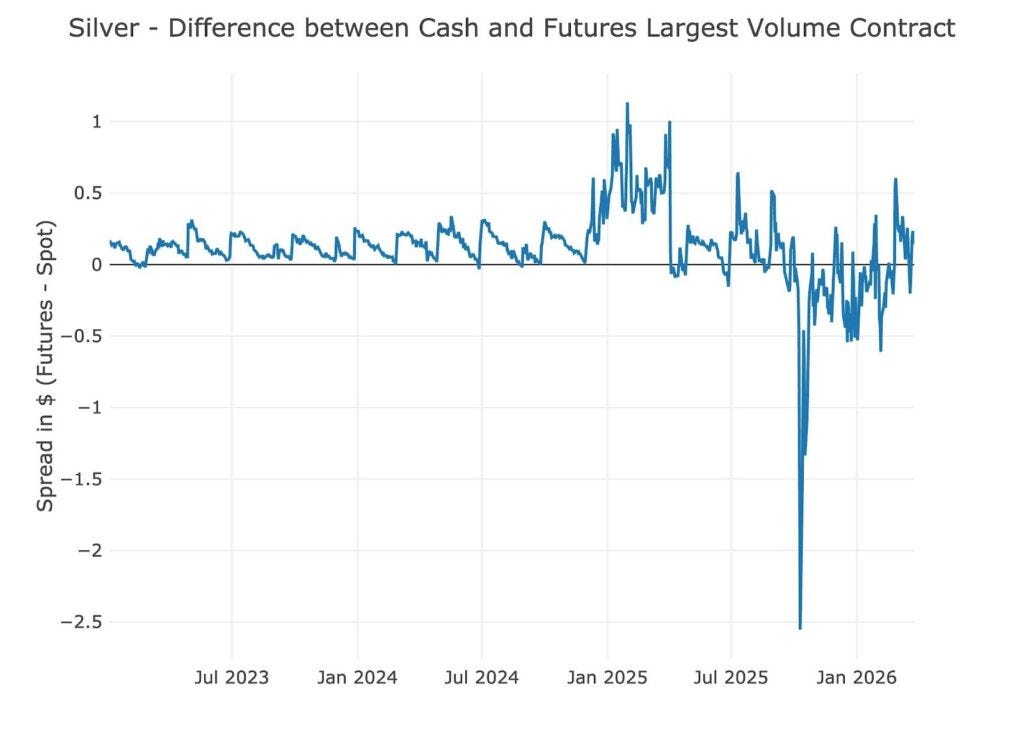
Figure: 7 Spot vs Futures
Silver delivery drifted down again when compared to December and all the major months in 2025 except for July. Volume was well north of the average prior to the 2025 delivery surge.
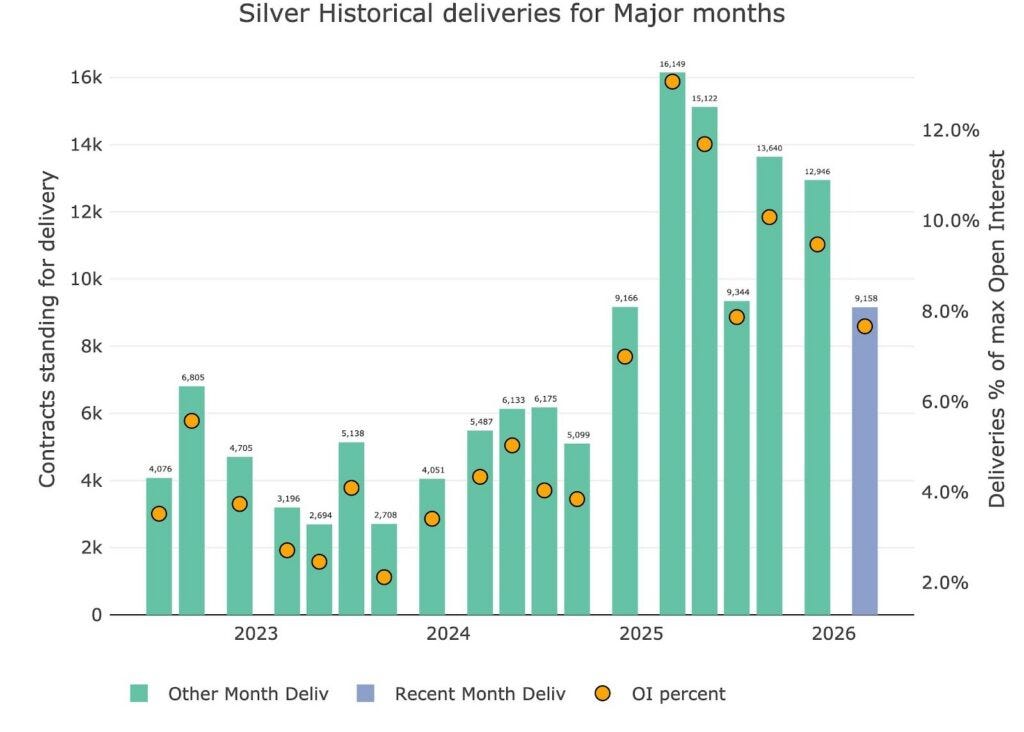
Figure: 8 Recent like-month delivery volume
Switching to notional values, and focusing on the month of March, produces the chart below. While most of this is price appreciation (over 7,000 more contracts were delivered in Mar 2025 vs Mar 2026), it still shows a very strong appetite for physical metal. Almost $4B of silver was delivered in this March which is massive volume.
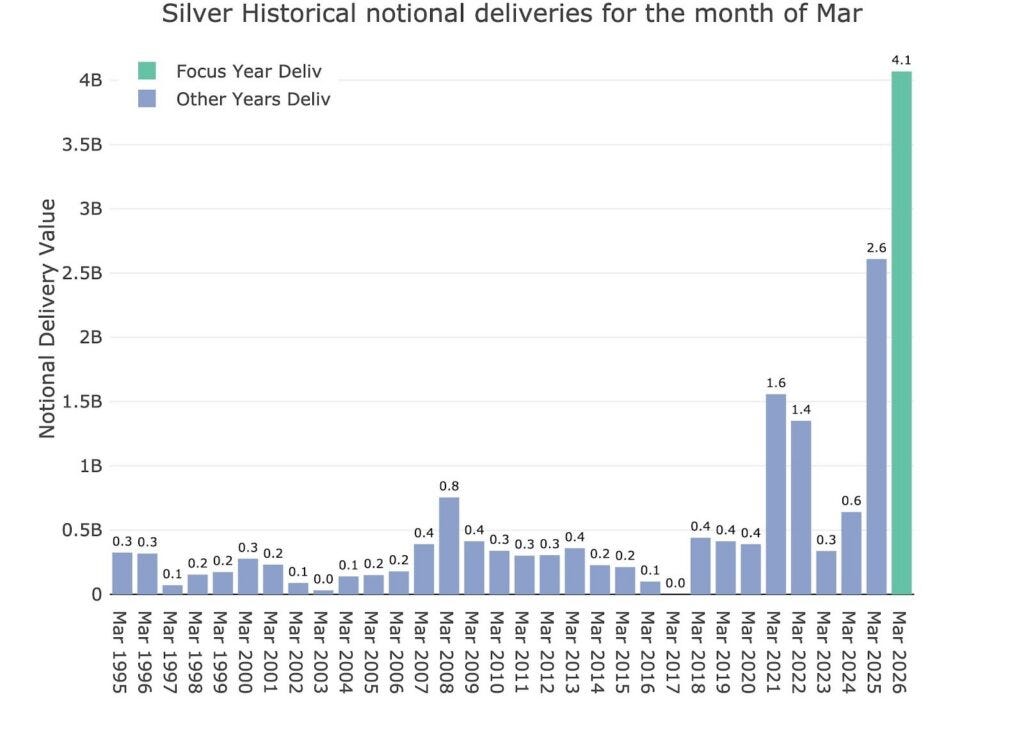
Figure: 9 Notional Deliveries
Similar to gold, net new contracts were a major driver with the second highest amount since last September.
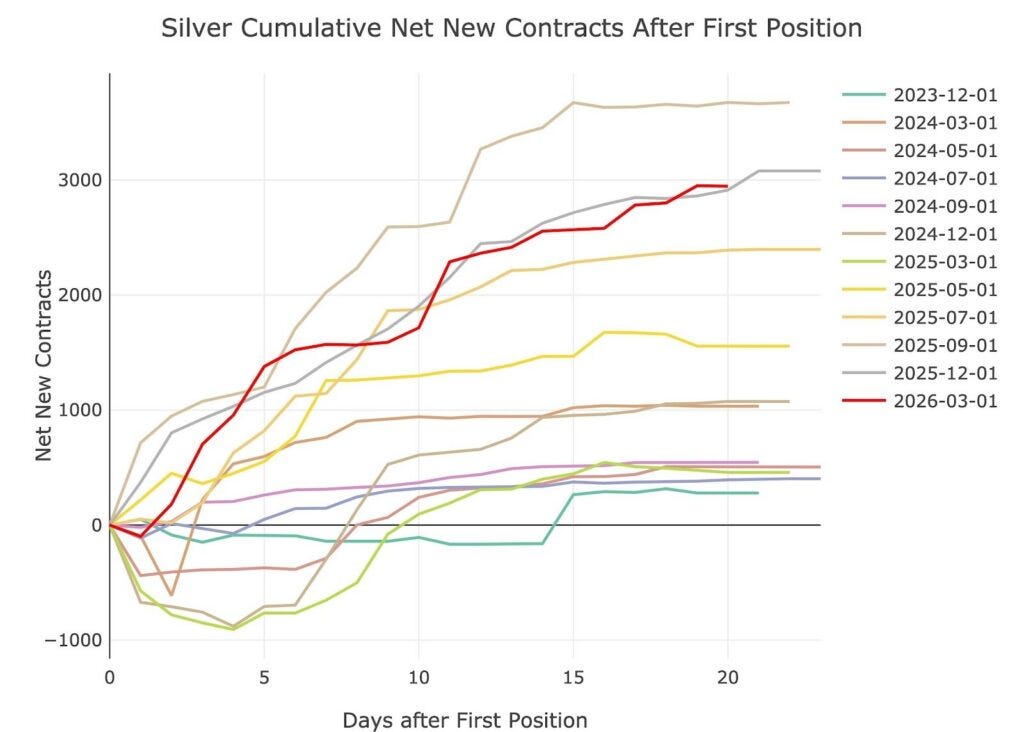
Figure: 10 Cumulative Net New Contracts
Silver eligible inventories have absolutely plummeted. Over 70M ounces of metal have left the Eligible category in 2026 alone. At this pace, Eligible will be empty by Q4 of this year.
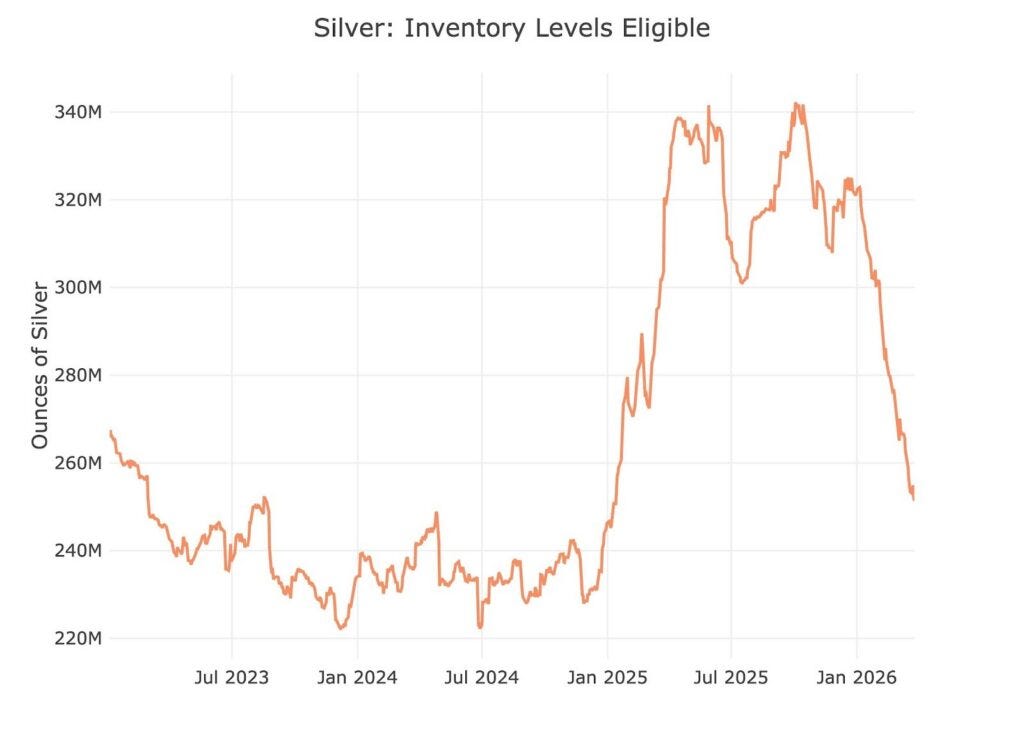
Figure: 11 Inventory Data
Registered metal (metal available for delivery) is also seeing major outflows. Since the start of the year, 50M ounces have left the vault. That means 120M ounces or $9B of silver have completely left the Comex in 2026. This has happened continuously and without pause day after day. If this trend continues at the current pace, Registered will be completely empty before September of this year.
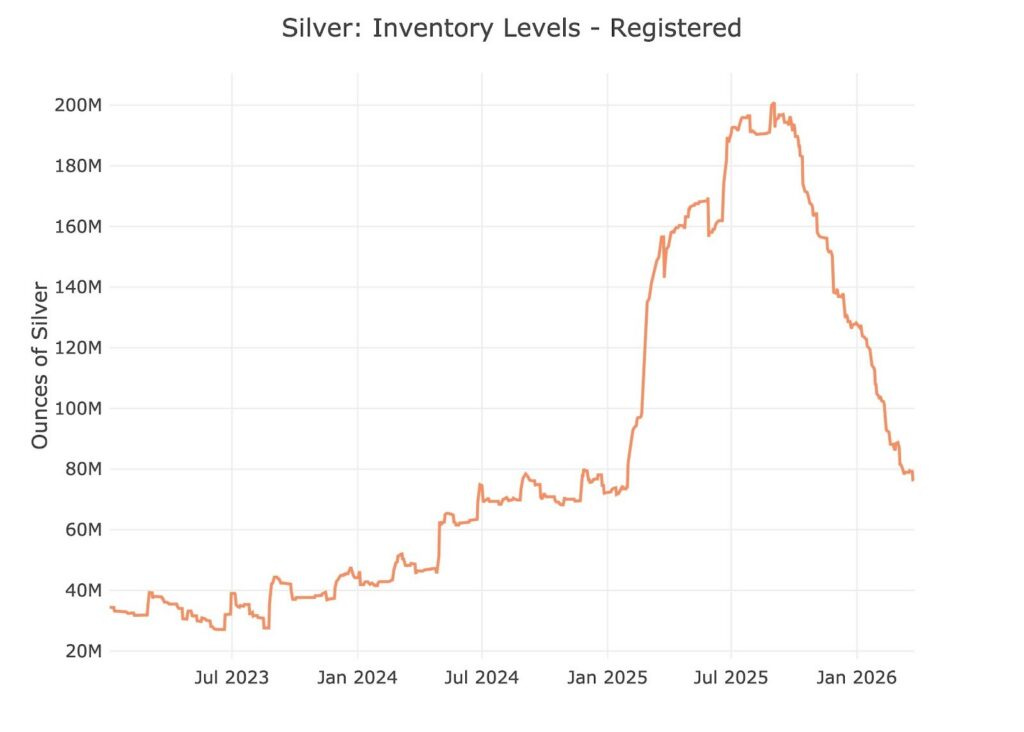
Figure: 12 Inventory Data
As we approach April delivery, the silver contract is at the lower end of the trend, but as we have seen, it will really come down to net new contracts.
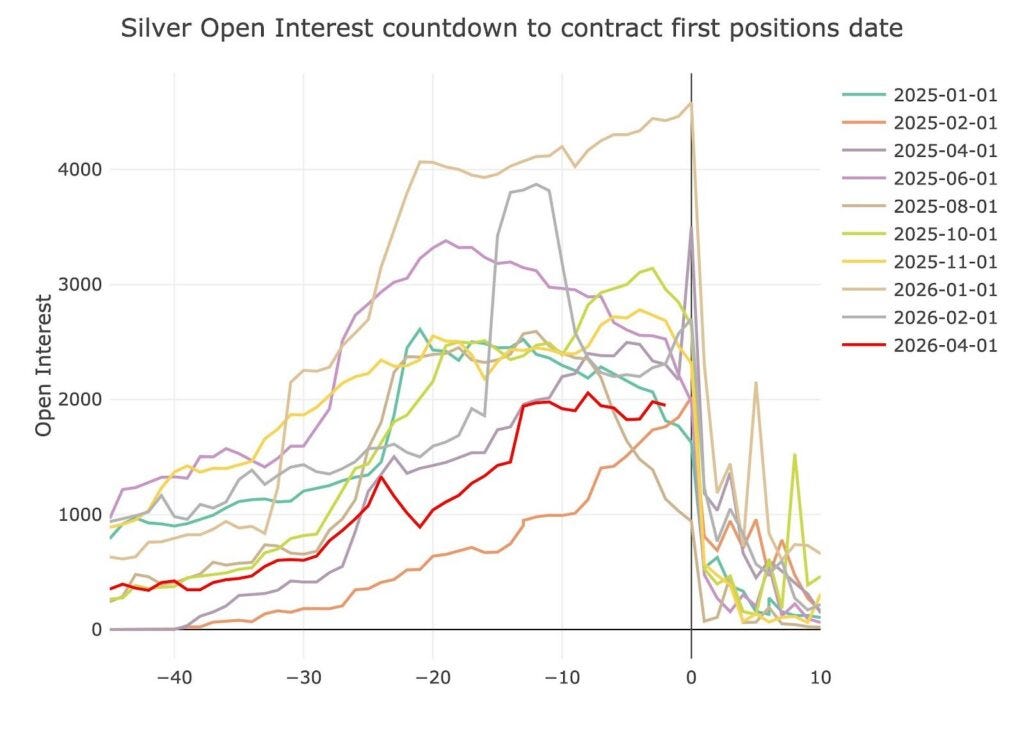
Figure: 13 Open Interest Countdown
On a relative basis, the open interest is actually on the higher side due to the massive draw down in inventories.
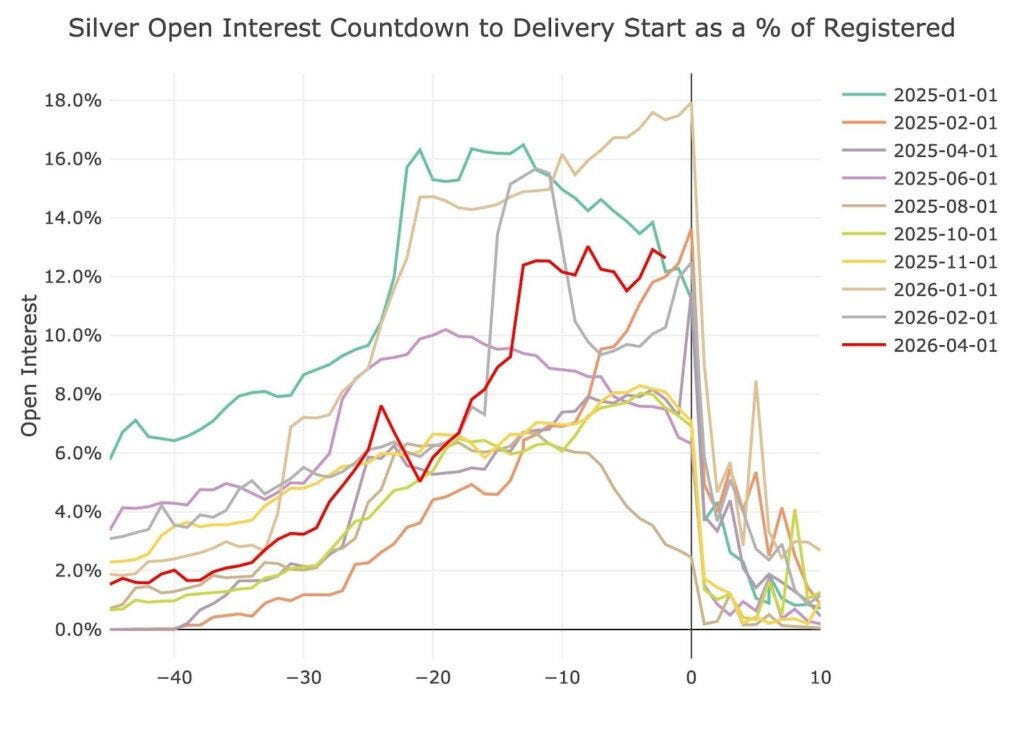
Figure: 14 Open Interest Countdown Percent
Conclusion
Every single data point above points to a singular outcome: physical metal is being bought and removed from Comex vaults on a consistent and continuous basis. This is steady pull that is happening slowly day after day, week after week, and month after month. No panic buying, no massive moves. Just a drip, drip, drip of metal leaving the Comex. This is strategic buying with steady demand. The paper price is not having any impact. This is intentional accumulation of physical metal.
If trends continue, all the metal will be drained from Comex by the end of the year. Likely, something will happen before that occurs. They will refill coffers or start forcing cash settlement. It is getting harder to refill the coffers though as physical supplies remain tight around the world. If Comex starts forcing cash settlement, then it will be clear that the paper and physical markets have fully dislocated. So just remember, if you don’t hold it, you don’t own it!

QTR’s Disclaimer: Please read my full legal disclaimer on my About page here. This post represents my opinions only. In addition, please understand I am an idiot and often get things wrong and lose money. I may own or transact in any names mentioned in this piece at any time without warning. Contributor posts and aggregated posts have been hand selected by me, have not been fact checked and are the opinions of their authors. They are either submitted to QTR by their author, reprinted under a Creative Commons license with my best effort to uphold what the license asks, or with the permission of the author.
This is not a recommendation to buy or sell any stocks or securities, just my opinions. I often lose money on positions I trade/invest in. I may add any name mentioned in this article and sell any name mentioned in this piece at any time, without further warning. None of this is a solicitation to buy or sell securities. I may or may not own names I write about and are watching. Sometimes I’m bullish without owning things, sometimes I’m bearish and do own things. Just assume my positions could be exactly the opposite of what you think they are just in case. If I’m long I could quickly be short and vice versa. I won’t update my positions. All positions can change immediately as soon as I publish this, with or without notice and at any point I can be long, short or neutral on any position. You are on your own. Do not make decisions based on my blog. I exist on the fringe. If you see numbers and calculations of any sort, assume they are wrong and double check them. I failed Algebra in 8th grade and topped off my high school math accolades by getting a D- in remedial Calculus my senior year, before becoming an English major in college so I could bullshit my way through things easier.
The publisher does not guarantee the accuracy or completeness of the information provided in this page. These are not the opinions of any of my employers, partners, or associates. I did my best to be honest about my disclosures but can’t guarantee I am right; I write these posts after a couple beers sometimes. I edit after my posts are published because I’m impatient and lazy, so if you see a typo, check back in a half hour. Also, I just straight up get shit wrong a lot. I mention it twice because it’s that important.
Based on the article is it recommended to purchase and hold physical gold and silver? And if so in what way can it be profitable or safe to purchase an illiquid asset that needs to be kept safe? The obvious benefit of having paper is it can be bought and sold easily and is stored in an electronic portfolio. Is the recommendation that physical prices will rise to the point that it’s profitable to forego the benefits of paper and purchase and hold physical metals?
GLD is "paper gold" because the average owner cannot redeem their shares in GLD for physical gold. However shares are backed by physical gold which the trust holds and amounts are audited by independent agencies to verify that the levels held are appropriate to the current price of gold. I choose to (theoretically) own gold in this way because for anything to be useful, it needs to be easily liquidated into a money that can be easily spent. I don't want to try to determine how many ounces of physical gold a home could be bought or sold for and try to find a buyer to agrees to that number. Much less a loaf of bread. Can someone please explain why that puts me at risk?