

I took a look at Seeking Alpha’s Top 10 articles yesterday and at least 2 or 3 of them were about chasing 8%-10% dividend yields via REITs, BDCs and other products. Thus came my inspiration for writing this morning. Today’s lesson is a simple one that people don’t seem to understand: if it pays more, you should probably be asking why.
Put simply, if an investment is yielding way more than everything else, there is a reason. Many times…but not all the time…the reason increases the risk profile.
I can’t believe this needs to be said, but it does: Wall Street is not handing out free money because they think you’re special. The higher the yield, the more you should be asking, “What’s the catch?”
Whether you’re buying a REIT on Robinhood or being pitched some bullshit life insurance or annuity product by a local “wealth manager” who took you out to Chili’s to get you drunk on weakass margaritas before pitching you, asking that question is a lot of what basic due diligence in finance amounts to.

Yield is simply the income an investment pays you. Banks pay interest, bonds pay interest, stocks pay dividends, and real estate can produce rental income. Everyone loves high yields, but almost nobody stops to ask where that money is actually coming from. Some people don’t know to ask. Others don’t want to fuck up their idea of themselves as investing geniuses by learning the answers. Either way, I get it.
But think of this first. Interest rates are basically the price of money. The Federal Reserve influences short term interest rates, so it provides a good starting point. If safe short term rates are around 3.5%, you can use that as a mental benchmark for comparing other investments.
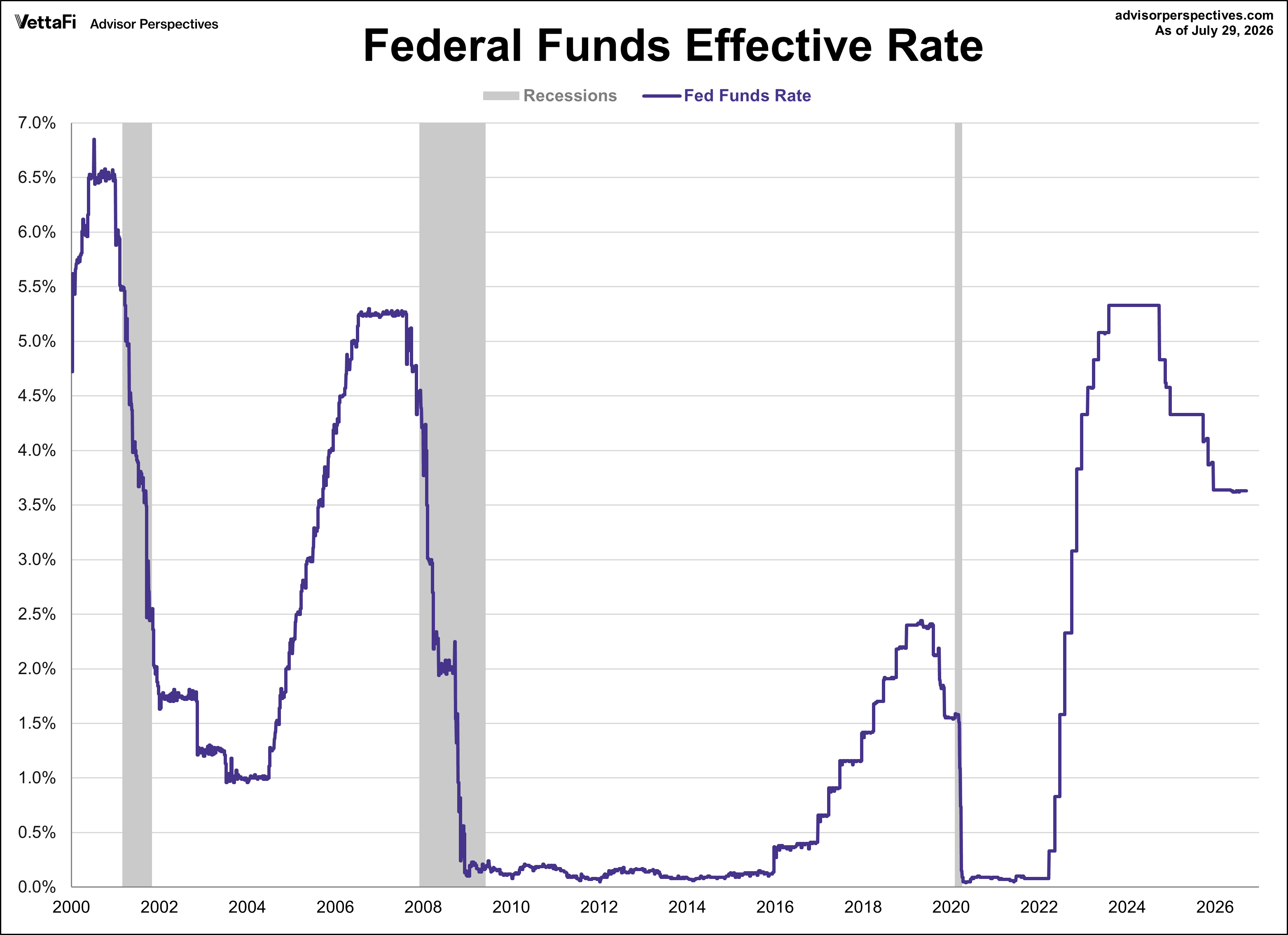
Now imagine your neighborhood bank is paying only 1% interest on your savings account. Why? Because they know you’ll probably leave your money there anyway. They have your checking account, your direct deposit, your mortgage, and you’ve probably forgotten your password to every other bank. If customers are not leaving, why would the bank voluntarily pay more? They are happy to take the spread between what the Fed offers them, around 3.5%, and what they pay you, 1%. That makes sense.
Now take another bank that offers a 5% CD while everyone else is paying around 3%. Does that mean the bank is about to fail? Not necessarily. But banks do not wake up one morning and decide they suddenly enjoy paying customers more money than they can earn. There is always a reason for these rates and while that reason is not always bad per se, it is always worth asking about.
Questions that would go through the ole’ Q-Man’s head include: Why would a bank pay customers more to attract their capital than they will receive on the cash? What is driving this unusually high rate? Is the bank aggressively trying to grow deposits? How will it earn enough on those deposits to cover the interest it is promising? Is this a temporary promotional strategy, or does it reflect a broader funding need? And if market rates are closer to 3%, why is this institution willing to pay 5%?
The answers to these questions reveal far more than the headline rate itself and encourage investors and depositors to look beyond the marketing to understand the bank's underlying business strategy.
The same idea applies to bonds. The U.S. government can typically borrow at the lowest interest rates because investors view Treasury securities as one of the safest investments in the world. Large, financially strong corporations with high credit ratings such as AAA or AA usually borrow at rates only modestly above Treasuries, often around 0.5% to 2% higher depending on market conditions.
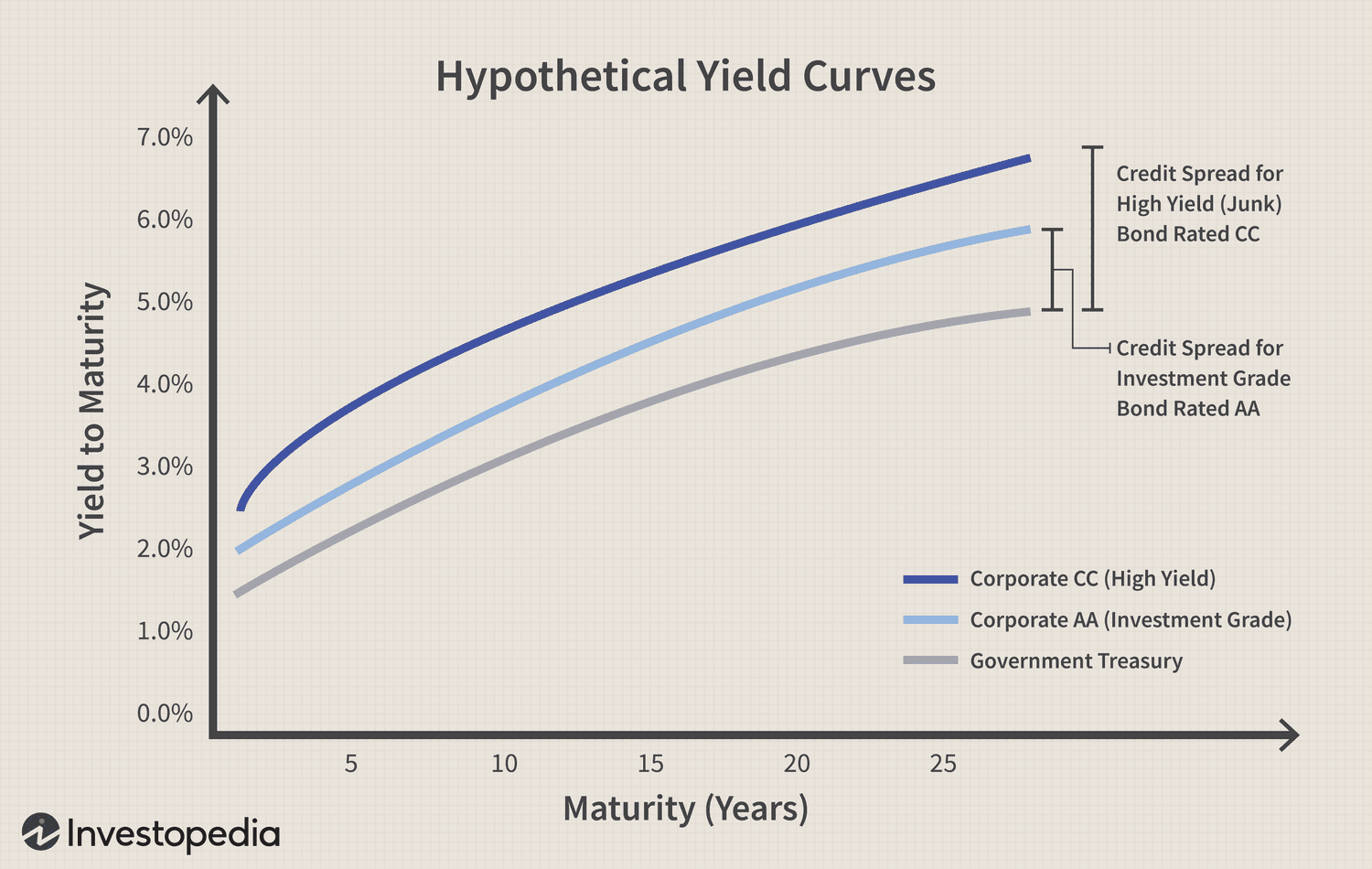
Companies with solid but lower investment grade ratings such as A or BBB may need to offer 1% to 3% more than comparable Treasury bonds. As a company’s financial position becomes less certain, investors demand increasingly higher returns to compensate for taking on additional risk. That extra yield above a Treasury bond is called the credit spread, and as the spread widens, the bond market is effectively saying, “We need more compensation because we’re less confident we’ll be repaid.”
Then you get to high yield (junk) bonds. These bonds are issued by companies with below investment grade credit ratings, meaning they have a higher probability of financial distress or default than stronger borrowers. Because of that added risk, junk bonds often pay 3% to 8% more than Treasury bonds, and during periods of economic stress those spreads can climb well into the double digits. That does not mean every junk bond is a bad investment. Many companies successfully repay their debt and investors earn attractive returns. It simply means the market is demanding a much larger reward because there is a much greater chance that something could go wrong.
Think of it this way. If your best friend asks to borrow $100, you probably hand it over without much concern. If your deadbeat cousin who still owes half the family money asks for the same loan, you might say, “Sure... but you’re paying me interest.” Congratulations. You now understand the junk bond market. It’s your deadbeat cousin. Make sure to let him or her know this Thanksgiving…
Anyways, back to the impetus for writing this piece: dividend stocks. Dividend stocks fool people even more because the math can be deceptive. Imagine a company pays a $4 annual dividend and its stock trades at $100. That is a 4 percent yield. If the stock price crashes to $50, the yield suddenly jumps to 8 percent even though the company is still paying the exact same dividend. The company did not become twice as generous. Half of its market value disappeared.
That is why an unusually high dividend yield is often a warning sign instead of a gift. People love saying, “Wow, this stock pays 12%!” What they should be asking is, “Why is everyone else selling it?” A falling stock price can make the yield look incredible right before the company cuts the dividend altogether.
Which way, modern man? You are confronted with two roads as an investor: one, the bullshit fairy tale of free money at 12% and two, asking the uncomfortable critical questions that make people get emotional and freak out in the comments section of articles after you pierce the snow-globe echo chamber they live in. I prefer road number two.

Other investments can legitimately pay higher yields. REITs own income producing real estate. Business development companies lend money to smaller or riskier businesses. Covered call funds earn option income. Some investments even borrow money to boost returns. Others simply give you part of your own money back and label it a distribution. Read that sentence again because it surprises a lot of people. Not every payment you receive is profit.
Every investor eventually discovers an investment advertising a 10% yield. It is usually accompanied by phrases like “passive income,” “hidden gem,” or “they don’t want you to know about this.” If safe investments are paying 4% and something else is paying 10%, you should immediately assume there is meaningful risk somewhere. That risk could come from heavy debt, risky borrowers, struggling real estate, leverage, falling profits, or a dividend that is hanging on by a thread. If you’re lazy, like I can be sometimes, you don’t even have to ask questions. Just avoid it.
Markets are not perfect, but they are generally very good at pricing risk. If thousands of professional investors are willing to buy one investment at 5% while another needs to offer 10%, there is usually a reason for that difference. It is far more likely that the market sees additional risk than that you have discovered the only free lunch in finance.
The biggest mistake people make is obsessing over income while ignoring their principal. Imagine Investment A pays a 10 percent yield but loses 30 percent of its value. Investment B pays only 4 percent but steadily holds or grows its value over time. Which one actually made you richer? The answer is obvious once you stop looking only at the yield.
So here’s your hard and fast rule. The farther a yield is above the Fed Funds rate or a reasonably safe alternative, the more carefully you should investigate why. Sometimes the higher yield is absolutely worth the extra risk. Other times it is simply the market waving a giant red flag.
Wall Street has spent generations convincing people that investing has to be incredibly complicated. Sometimes it is. But this part is surprisingly simple. If everyone else is paying 4% and one investment is paying 10%, do not ask, “How much money can I make?” Ask, “What am I risking that everyone else doesn’t want to?”
That one question will probably save you from more bad investments than any hot stock tip, YouTube guru, or flashy dividend list ever will.

QTR’s Disclaimer: Please read my full legal disclaimer on my About page here. This post represents my opinions only. In addition, please understand I am an idiot and often get things wrong and lose money. I may own or transact in any names mentioned in this piece at any time without warning. Contributor posts and aggregated posts have been hand selected by me, have not been fact checked and are the opinions of their authors. They are either submitted to QTR by their author, reprinted under a Creative Commons license with my best effort to uphold what the license asks, or with the permission of the author. I cannot guarantee the accuracy of all facts and figures included in this article though I made my best effort to get them right. I have been wrong before and will be wrong again, and encourage you to always double check, do your own research and speak to a licensed financial professional.
This is not a recommendation to buy or sell any stocks or securities, just my opinions. I often lose money on positions I trade/invest in. I may add any name mentioned in this article and sell any name mentioned in this piece at any time, without further warning. None of this is a solicitation to buy or sell securities. I may or may not own names I write about and are watching. Sometimes I’m bullish without owning things, sometimes I’m bearish and do own things. Just assume my positions could be exactly the opposite of what you think they are just in case. If I’m long I could quickly be short and vice versa. I won’t update my positions.
As of May 20, 2026 I am attempting to no longer actively trade as much as I once did (read my story here). My eventual goal is for investing/saving to be mostly done by recurring contributions mostly to sector ETFs and a few select equities, trusted third parties who oversee my accounts, and advisors. Such advisors or funds, through individual equities, options, index funds, mutual funds, ETFs, or other securities, may have positions in, exposure to, or holdings of names mentioned herein that I know nothing about. Basically, via index funds, ETFs and individual equities it is possible I could own, have exposure to, or not own anything at any point. As of the same date, May 20, 2026, in an attempt to lead a healthier lifestyle, I’ve also excluded myself from fantasy sports, sports betting, online and in-person casinos and prediction markets.
And all positions can change immediately as soon as I publish this, with or without notice and at any point I can be long, short or neutral on any position. You are on your own. Do not make decisions based on my blog. I exist on the fringe. If you see numbers and calculations of any sort, assume they are wrong and double check them. I failed Algebra in 8th grade and topped off my high school math accolades by getting a D- in remedial Calculus my senior year, before becoming an English major in college so I could bullshit my way through things easier.
The publisher does not guarantee the accuracy or completeness of the information provided in this page. These are not the opinions of any of my employers, partners, or associates. I did my best to be honest about my disclosures but can’t guarantee I am right; I write these posts after a couple beers sometimes. I edit after my posts are published because I’m impatient and lazy, so if you see a typo, check back in a half hour. Also, I just straight up get shit wrong a lot. I mention it twice because it’s that important.
Bookmarking this one, for my college kid.
All you day is true. But I as an older man, I am quite fuchsia in dividend income, and reinvestment rather than capital gains. I have found the mid stream energy companies excellent, and some week run bond funds. I have also gotten screwed cussing yield and watching the share price dwindle. I have lots of faith in energy and precious metals over time, and do not react to the normal dramatic price swings anymore. It has taken most of my lifetime to learn these lessons.