

Please read my disclaimer at the bottom of this post slowly and carefully.
For weeks after the outbreak of conflict with Iran, the dominant narrative on Wall Street was reassuring, even admittedly from me: geopolitical shocks tend to be short-lived and rarely derail equities in a lasting way.
My prediction of a quick, surgical and decisive conflict in the middle east was deadass wrong (as many of my subscribers warned me it would be). We’re now moving into the second month of tensions, and markets are no longer brushing it off as noise, they’re reacting in real time.
And at the same time we have a geopolitical conflict, we also have a private credit sector with well over $100 billion in assets under some form of stress that looks like it’s about to crack. Private credit is 1 of 10 areas of the market I warned about heading into 2026.
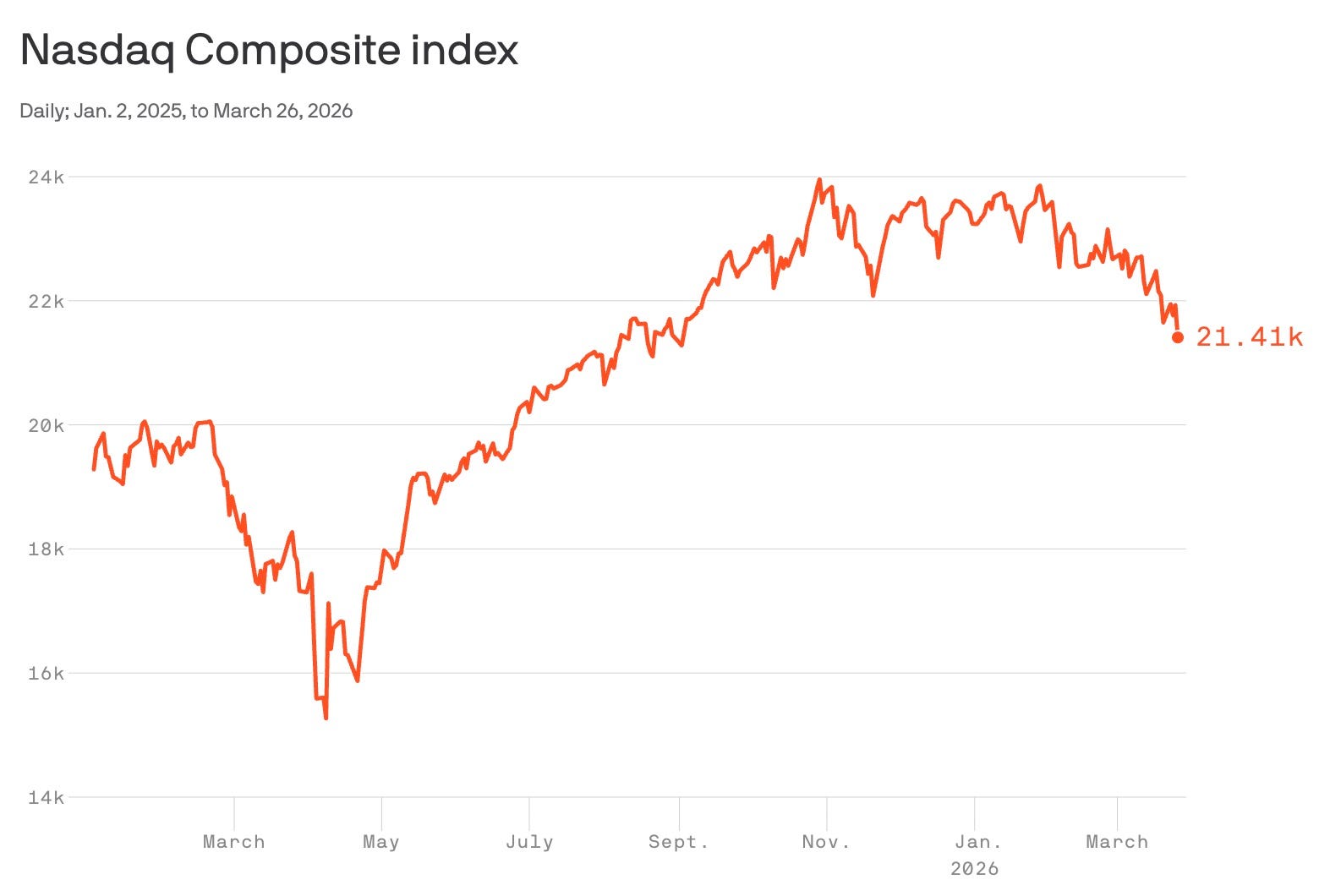
The damage is now visible across the major indices. The Nasdaq has fallen into correction territory, down more than 10% from its highs, while the Russell 2000 has already followed. Even the S&P 500, which had held up relatively better, is now meaningfully lower.
Temporary pauses and shifting deadlines from President Trump have done little to restore confidence. Oil jumping back toward $110 a barrel underscores how fragile the situation remains and how little clarity investors have on a path to resolution.
What makes this environment more dangerous than prior geopolitical shocks is how intertwined household wealth is with equities. Today, roughly 40% of U.S. household wealth is tied to the stock market. That creates a potential double hit: rising energy costs paired with falling portfolios. If this continues, it’s not just a market story, it becomes a consumer and economic slowdown story as well.
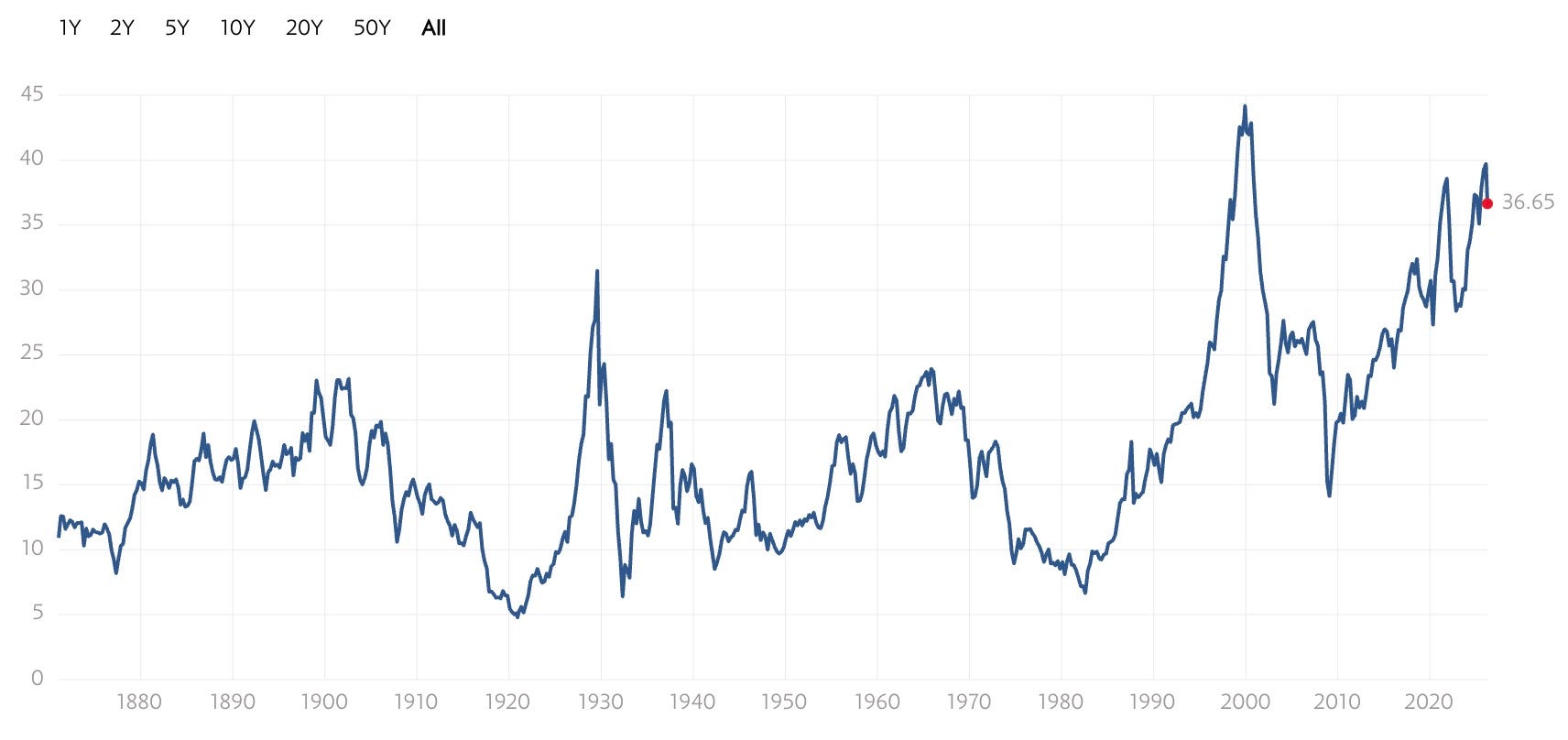
Even after this selloff, valuations remain stretched by historical standards. With the Shiller P/E still hovering around ~35x, this is not what a traditionally “cheap” market looks like no matter how you frame it.
But corrections create dispersion. And within that dispersion, opportunities begin to emerge. This piece isn’t about saying the market is broadly attractive, because it isn’t. It’s about identifying specific companies where valuations are starting to compress into ranges that have historically offered strong long-term entry points.
If the market sells off further, many of these will only become more compelling. These are the names I’m watching closely as the market sells off.