

By Mark Thornton, Mises Institute
Over the last year, the precious metal markets have seen historic increases and then decreases in price. This, of course, is the result of the workings of supply and demand, but there have also been cries of market manipulation.
I have laid out the supply and demand conditions both in the pure free market and under current conditions in the real world on this podcast and in several interviews reproduced here.
Several forms of manipulation, such as changing margin requirements are expected, and other forms of manipulation, such as mysterious shutdowns and slowdowns can be anticipated. Above all else, organized markets and political actors will act to save themselves first.
As a result, I have declared several times over the last year that when prices began to reach record levels—particularly when silver approached $50 per ounce—that precious metal markets are going to experience “growing pains.”
Of course, all market activities manipulate the market in terms of changing prices and quantities exchanged, but in this case, commentators are often pointing to alleged illicit activities.
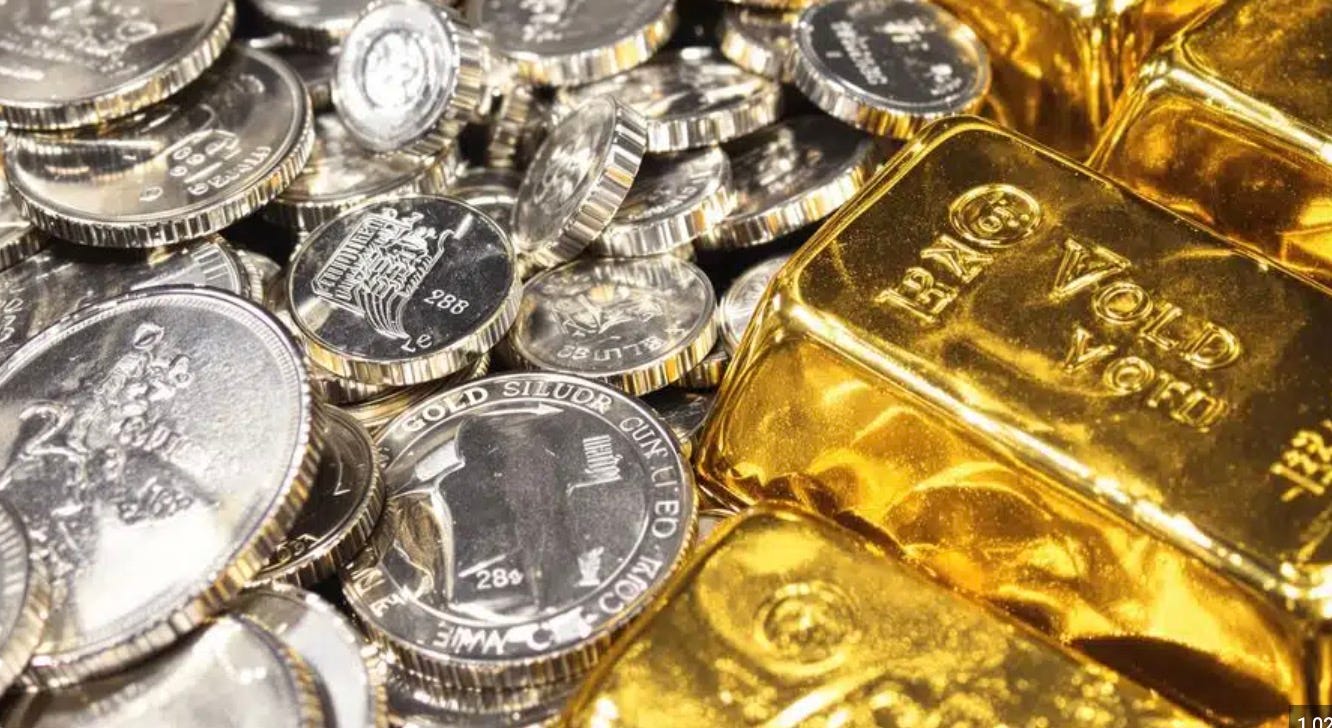
Our primary understanding of these markets is that—in a total free market model, where gold is literally money—it has a remarkable stability of purchasing power over the long haul, and that major alterations of price or purchasing power are the result of government interventions, and that deviations of price from long-run trends in inflation are the result of real world short-run adjustments in supply and demand, such as changing expectations, the outbreak of war, and developments in the business cycle.
Prior to the bull market in gold and silver, some commentators, myself included, have pointed out several reasons to suspect that gold might experience an increase in demand and that the realities of precious metal supply in terms of mine output would amplify price adjustment to those increases in demand. Those commentators turned out to be correct.
Prior to the recent, sharply-lower prices, some commentators pointed out that any decrease in demand could also have sharp negative effects on prices. Those commentators were also correct. However, it is important to list some examples of those who decreased their demand, becoming suppliers, how that worked for them, and establish that these markets work. Will everyone decrease their demand to hold precious metal entirely and the prices fall to zero?
Precious metals have 24/7 global markets but let us start in the US. Among all the various reasons why precious metals have been sold domestically—shifting demanders into suppliers—are the following:
Speculators and traders: They rode the markets up and then decided to take profits and switch to other markets, notably oil even before the outbreak of hostilities. This type of trading is dependent on valuation of relative performance and speculation of future conditions, including inside information. Meanwhile, “manipulators” were also helping to push the markets up in anticipation of taking advantage of shorting the markets.
Liquidity crunches: We know that certain investments—notably private equity and private credit—are experiencing so-called liquidity issues because the Fed started an emergency program in December and redemptions of this “sequestered” capital category (not openly traded in markets) have been blocked by the gatekeepers. This means that these assets are not generating enough revenues to cover expenses and debt obligations and can’t be readily redeemed for cash. The Fed’s $40 billion a month program of Reserve Management Purchases (RMPs) seems to have been sufficient in December of 2025. Maybe not, more recently. If this is a significant ongoing problem, then expect this program to be expanded.
In both of these cases, precious metal markets performed as expected. People shifted currency into precious metals as a risk-off monetary asset and then shifted back out to address liquidity problems and to address changing market conditions.
Outside of the US, the primary event has been the Israelis’ attack on Iran with the notable support of the US. Without going into the details, so far, this war has destroyed a great deal of capital and business activity.
It is important to note that this has harmed the global population in terms of the consumption of petrochemicals, all the derivative products, and the decrease in supply of just about everything consumed because it drives up costs of production generally. The disruption of trade has put hundreds of millions of people at particular risk and of course, the situation could get much worse.
However, if we focus our attention on those in the conflict zone itself, the states surrounding the Persian Gulf and the Levant: Syria, Lebanon, Judea/Palestine, Jordan, Cyprus—the original land of the rising Son. We would note that the Persian Gulf states have been large liquidators of gold due to the destruction and idling of their oil related assets/their primary income stream and the desire to exit the region.
This selling of gold is indicated by the discount price it is selling at in Persian Gulf markets and gold has undoubtedly served its primary role as a monetary asset for deeply troubling times just as it would for others during hyperinflation.
It is important to remember that crises, crashes, and war have negative effects that can be contagious, but they nonetheless impact groups of people differently inside the global context.
As liquidity conditions in world asset markets are still very uncertain and war conditions in the Middle East are ongoing, precious metal markets will continue to experience a decrease in demand and increase in supply until those balances approach exhaustion or relief. At that point, markets may shift their attention to issues such as credit crises, asset overvaluation in the face of rising interest rates, and increasing costs of maintaining government spending and debt obligations, specifically inflation and interest rates. Most critically, what will central banks do next?

QTR’s Disclaimer: Please read my full legal disclaimer on my About page here. This post represents my opinions only. In addition, please understand I am an idiot and often get things wrong and lose money. I may own or transact in any names mentioned in this piece at any time without warning. Contributor posts and aggregated posts have been hand selected by me, have not been fact checked and are the opinions of their authors. They are either submitted to QTR by their author, reprinted under a Creative Commons license with my best effort to uphold what the license asks, or with the permission of the author.
This is not a recommendation to buy or sell any stocks or securities, just my opinions. I often lose money on positions I trade/invest in. I may add any name mentioned in this article and sell any name mentioned in this piece at any time, without further warning. None of this is a solicitation to buy or sell securities. I may or may not own names I write about and are watching. Sometimes I’m bullish without owning things, sometimes I’m bearish and do own things. Just assume my positions could be exactly the opposite of what you think they are just in case. If I’m long I could quickly be short and vice versa. I won’t update my positions. All positions can change immediately as soon as I publish this, with or without notice and at any point I can be long, short or neutral on any position. You are on your own. Do not make decisions based on my blog. I exist on the fringe. If you see numbers and calculations of any sort, assume they are wrong and double check them. I failed Algebra in 8th grade and topped off my high school math accolades by getting a D- in remedial Calculus my senior year, before becoming an English major in college so I could bullshit my way through things easier.
The publisher does not guarantee the accuracy or completeness of the information provided in this page. These are not the opinions of any of my employers, partners, or associates. I did my best to be honest about my disclosures but can’t guarantee I am right; I write these posts after a couple beers sometimes. I edit after my posts are published because I’m impatient and lazy, so if you see a typo, check back in a half hour. Also, I just straight up get shit wrong a lot. I mention it twice because it’s that important.
I think liquidity is one of..if not the singular most important cornerstones of Gold of gold ownership. Its universal and global, instantaneous bid/ask spread assures one a ready market when or if necessary.
As for its price reflection I fall back to the friction argument. All of the energy, labor, time and money spent to manufacture and produce that ingot is now permanently contained in it and thereby it's value, in price terms, permanently sustained at some level.
This nation has absolutely no appetite or political ability to sustain a long drawn out military campaign financed by a Fed Govt and Fed so unhinged from reality and so bereft with corruption. There is little to no support out there for shipping trillions more of our nations wealth into neutral seaside EU block nations in never ending, dollar laundering schemes. We all see the scam now.
When I hold that ingot. None of that shit matters.
JP Morgan: "Gold (and Silver) is MONEY - everything else is CREDIT!"