

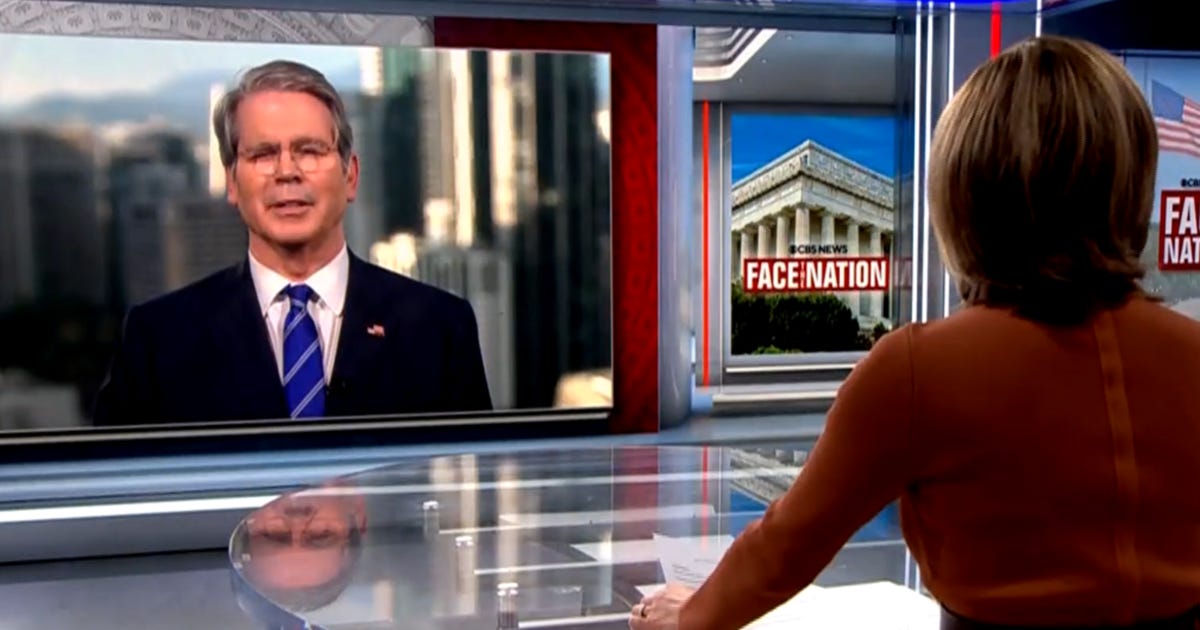
On Sunday, Treasury Secretary Bessent said on Face the Nation that he was worried the Fed could jeopardize the economy by over-tightening.
“Many people believe that they may be making a policy mistake if they overtighten,” he said during his appearance. “We’ve seen a substantial tightening in financial conditions over the past few months.”
Later in the day, hedge fund manager Bill Ackman took to Twitter to also express his thoughts on the Federal Reserve and his agreement with Bessent’s sentiment that raising rates would be another major monetary policy mistake.
“I think the Fed is about to make another mistake on December 9th. Financial conditions have tightened massively,” Ackman wrote, referring to the assumed coming rate hikes.
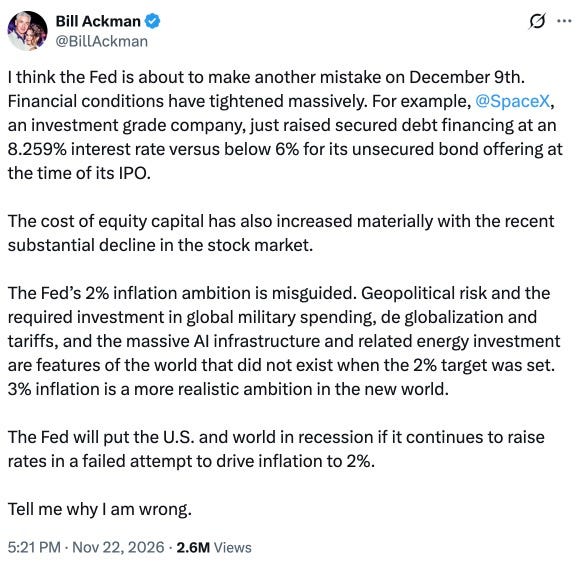
He pointed to the rising cost of capital, citing SpaceX as an example, before arguing that the Federal Reserve’s longstanding inflation target is no longer appropriate for the world we live in.
“The Fed’s 2% inflation ambition is misguided,” Ackman stated. “Geopolitical risk and the required investment in global military spending, de globalization and tariffs, and the massive AI infrastructure and related energy investment are features of the world that did not exist when the 2% target was set.”
Ackman added that “3% inflation is a more realistic ambition in the new world,” warning that the Fed could push the United States and the global economy into recession if it continues raising interest rates in pursuit of 2% inflation.
He ended his post with a challenge: “Tell me why I am wrong.”
Well, I think Ackman is wrong, but is going to be proven right. Not because I agree with his argument that the Federal Reserve should abandon its 2% inflation target. In fact, I think doing so would be damaging to the average American household. But because I believe the Fed has spent the better part of two decades backing itself into a monetary corner from which there is no painless escape, as I’ve constantly written.
I think the Fed will eventually have to accept structurally higher inflation.
Whether that comes through an explicit increase in its inflation target from 2% to 3%, or through more subtle changes in how inflation is measured, emphasized, and communicated, I believe monetary authorities will ultimately choose to tolerate more inflation rather than endure the economic consequences of fully extinguishing it.
I think it will be their only option as they respond to the coming bond and/or equity market turmoil.
And that is one of the biggest reasons I am extraordinarily bullish on gold. Because if I’m right, we’re not simply talking about another inflationary cycle. We’re talking about a fundamental change in the Federal Reserve’s commitment to preserving the purchasing power of the dollar, with potentially enormous implications for precious metals.

Despite believing Ackman may be right about where monetary policy is headed, I responded to his post explaining why I think his proposed solution is deeply problematic.
“Because permanently accepting 3% inflation means sacrificing the purchasing power of lower- and middle-income households, particularly those without assets that appreciate with inflation,” I wrote. “It’ll brutalize the everyday family who already can’t afford groceries.”
And I stand by that. The difference between 2% and 3% inflation might seem insignificant to someone with billions invested in equities, businesses, and real estate. But over 30 years, 2% inflation erodes approximately 45% of a dollar’s purchasing power, while 3% erodes nearly 59%.
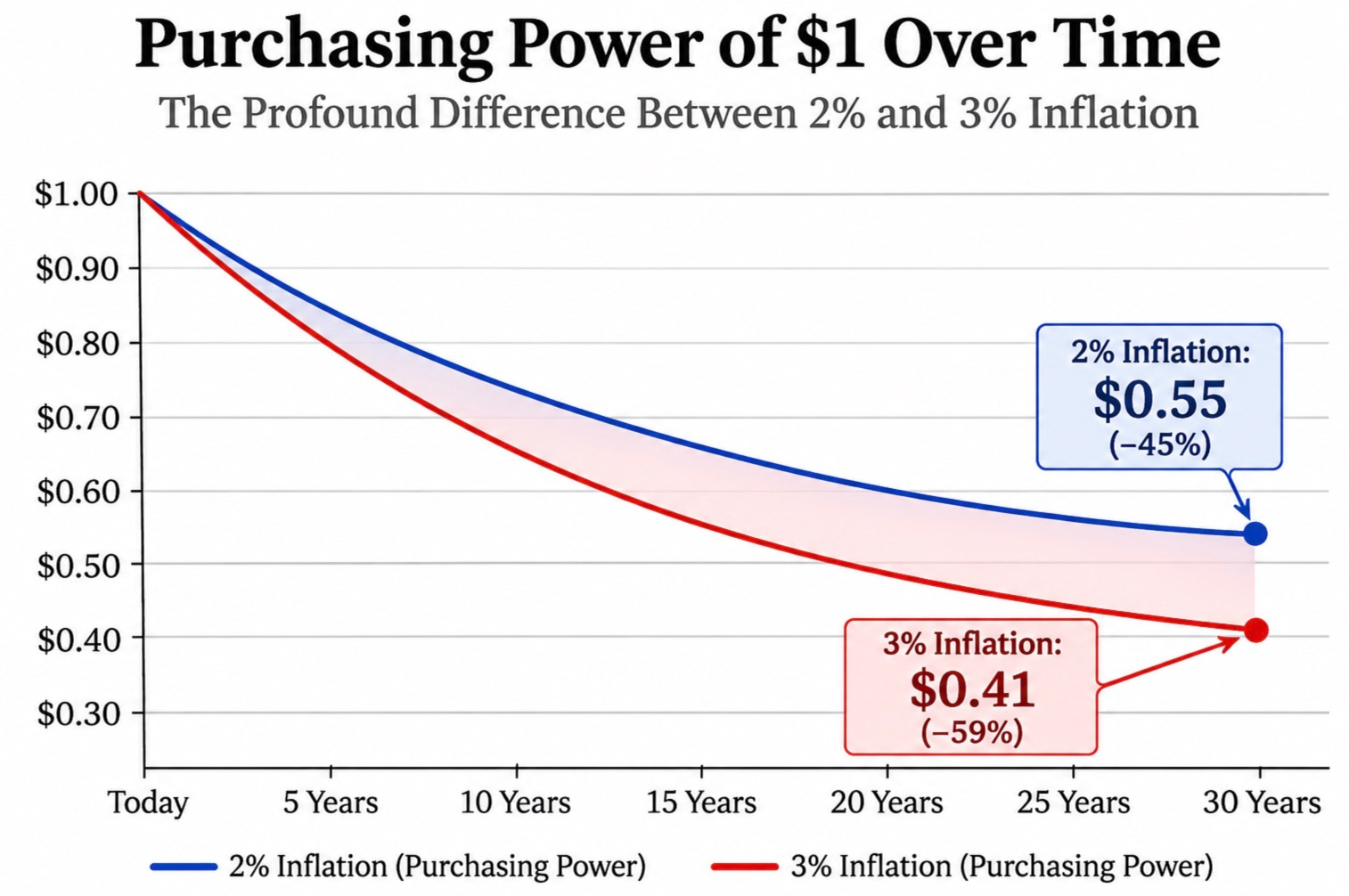
For Americans who own appreciating assets, inflation can be offset by rising asset values. But for the plumber, teacher, or retiree living on a fixed income, it’s a different story. Their living costs rise while wages and savings don’t necessarily keep pace.
I also questioned Ackman’s use of SpaceX’s borrowing costs as evidence of excessively restrictive monetary policy. A single company’s borrowing costs reflect credit risk, duration, liquidity, and financing structure, not simply Fed policy. And the structural inflationary forces Ackman identifies are arguably reasons to defend price stability, not abandon it.
But the final point in my response was the most important: