

My friend Mark Spiegel sometimes feels like the last living value investor in history.
I love talking to Mark because, in his mind, our markets and the laws of economics haven’t been coopted and usurped by the insanity of Modern Monetary Theory and money printing yet. Well, Mark understands those concepts drive markets nowadays, he has just not given in to the idea that they will forever.
In other words, Mark believes that markets will again revert back to historical averages and normalcy at some point. And while his fund has really had a difficult run the last year or two, Mark has started 2026 beating the S&P 500 by a couple percentage points and those gains could accelerate if markets once again return to the realistic lens with which he sees things.
Mark is one of those stubborn, “tethered-to-reality” types. To him, the idea that markets are trading at current levels is not merely questionable, it’s borderline absurd. And honestly? A large part of me is right there with him. In any rational vacuum, he’s not just right… he’s obviously right.

My main thesis for being bullish heading into 2026, as I see it, is simply: the rules don’t apply anymore and everything is broken, so the market will never again trade on historical fundamentals or with any semblance of sanity ever again.
So far, this is the case that has been winning out in markets over the last few years, thanks to caustic monetary policy and an unsophisticated retail investor base, layered on top of a passive bid that doesn’t care about P/E ratios or the like.
That’s why I value Mark’s perspective. It’s a view of markets I see less and less as I drift toward the idea that, because of QE, maybe we never revert to the mean. Mark is the counterbalance to that thinking. And deep down, I’m still a fundamental investor—far more so than many market participants today. I’ll always have more in common with Mark than with investors chugging Mountain Dew out of a two-liter bottle, playing The Sims with one hand and daytrading Fartcoin on Robinhood with the other.
Mark’s February letter is out, and in it he explains why he believes the market is overvalued. He also lays out several new long positions and the reasoning behind them. As always, it’s a great read—and a reminder of what reality used to look like before “finding deep value on selloffs” turned into Tom Lee enthusiastically pitching Ethereum on CNBC every single 0.5% drawdown in the S&P 500, regardless of rhyme, reason, or thesis. I wish I was being hyperbolic. I’m not.
So take a walk through the mind of what sometimes feels like the last living value investor alive—my buddy Mark Spiegel. This letter is dated February 27, 2026 and includes five of his “deep value” long positions, including 3 with dividends over 6%.
Despite adding two new deep-value long positions this month (discussed below), we continue to be on and-off* net short this biggest asset bubble in modern history, via various ETFs and individual companies. I’m often asked what the catalyst will be to pop this bubble, and my answer is simple: bubbles find pins. The more stretched that valuations are, the more things there are that can “pop” them. A macro (or even geopolitical) problem that stocks might ignore at 15x earnings can be “a catalyst” at 25x earnings. Maybe that catalyst will be a “known unknown” such as private credit or Ai infrastructure overspending and the inability to pay for it, or maybe it will be an “unknown unknown.” Again, bubbles find pins.
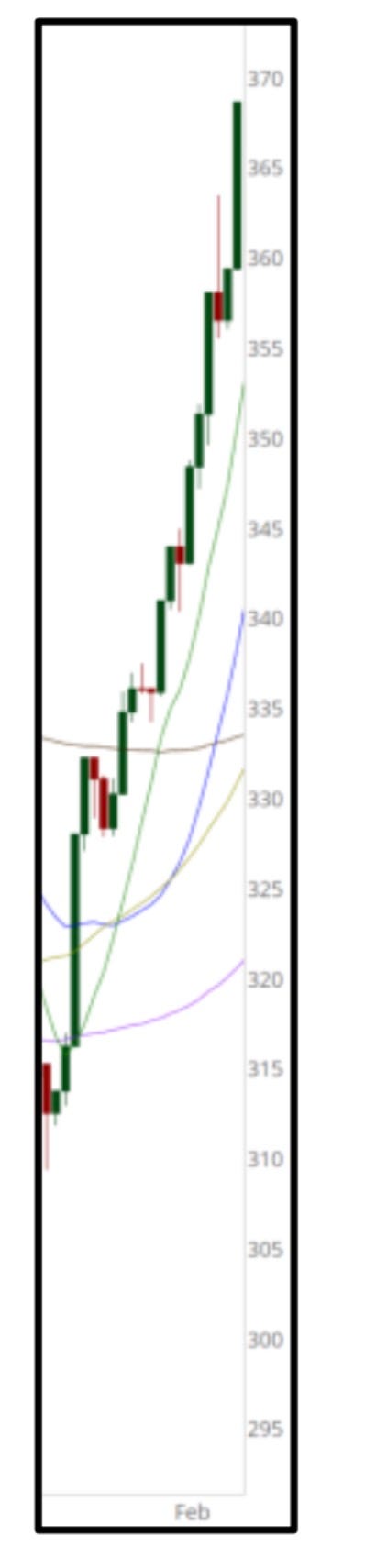
*I temporarily covered our shorts pending the resolution of the Iran situation, as the S&P 500 is at what has been VERY strong support since May (the 100-day MA) and I don’t want to be on the wrong side of a big relief rally if Trump makes a deal with Iran. In fact, the market might rally even if we attack, as it did when the first Gulf War started on January 17th, 1991; if you don’t remember that rally, take a look:
As noted here over the last several months, I remain disgusted and embarrassed by this fund’s horrific performance since the beginning of 2023 (when we’d set our high-water mark of having compounded at 9.9% annually for the previous 12 years) and, on a few days’ notice, can redeem any of you as of month’s end. I sincerely hope that during my performance debacle you’ve made a lot of money on your long positions, and that when this market (inevitably) tanks I’ll be able to protect some of those gains for you. Meanwhile, I continue to waive our management fee until I get you back above your high-water mark—something I did during a bad stretch several years ago before setting a new high mark at the end of 2022.
Now, about that bubble…
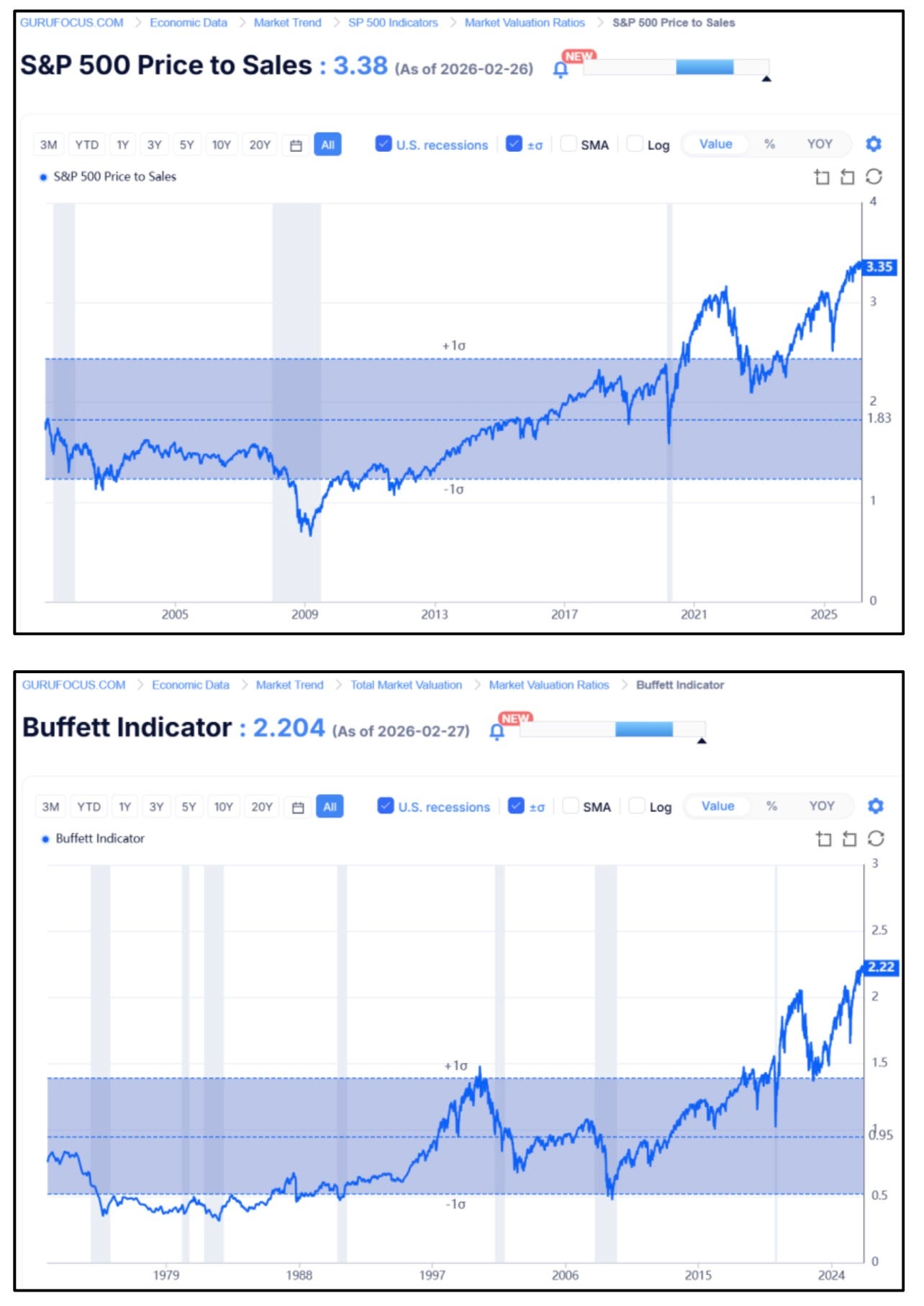
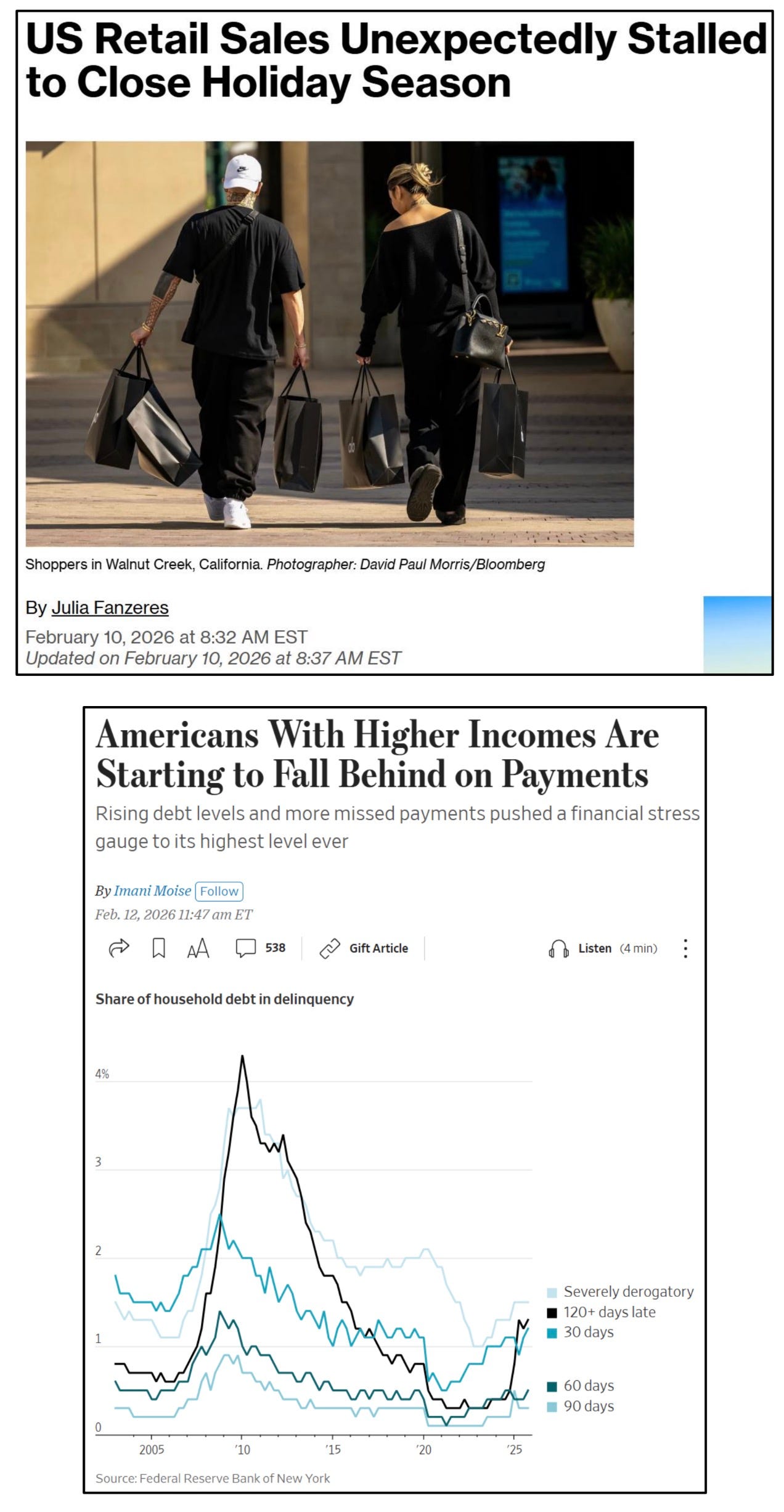
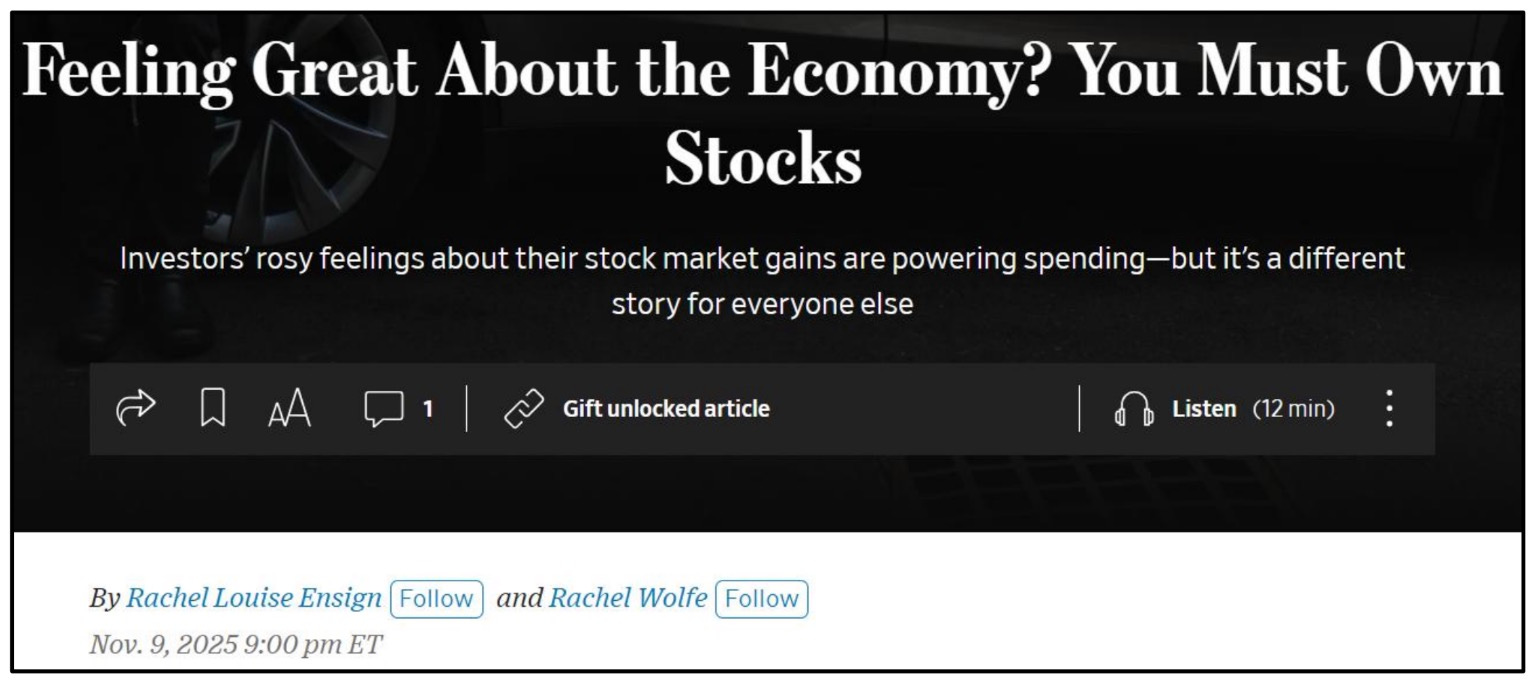
…and “the cart” is now leading “the horse,” in that the stock bubble is supporting an economy that’s supposed to determine financial asset prices, not be driven by them. This is similar to how the housing bubble supported that stock bubble, and we all know how things ended when “a bubble” supported “a bubble”:
Meanwhile the Fed has made it clear that it‘s tolerant of inflation running well over its supposed 2% target despite the fact that inflation is clearly sticky and may be about to reaccelerate, which means PE multiples need to come down significantly from the S&P 500’s current run-rate ratio of over 24. 17.6x is a logical target (as I explain below) and that would mean a drop of nearly 30% in the S&P 500 assuming the “E” doesn’t decline; if it does (as happened when the 2000 and 2007 bubbles burst), the decline will be much worse.
Factset’s latest estimate for Q4 2025 S&P 500 earnings is $70.50, which is $282 annualized. The S&P currently sells for over 24x those annualized earnings, yet the traditional “rule of 20” (which says that its PE ratio should be 20 minus the current 2.4% rate of inflation) would put a 17.6x multiple on them, thus bringing that index down to just 4963 vs. the current 6879, a drop of nearly 30%.
Meanwhile, Trump’s tariffs are forcing almost every U.S. company into a more expensive supply chain, thus pressuring profit margins for those already expensive stocks. And even though the Supreme Court invalidated the broad tariffs Trump instituted under IEEPA, he plans to re-institute most of them via other means.
That covers the short. Now for the longs. [QTR: This month Mark includes two new long positions, and of his five key longs, three of them have dividend yields over 6%].