

By James Hickman, Schiff Sovereign
Some of us are old enough to remember life in 1999.
That Prince song– party like it’s “1999”– was constantly on the radio in anticipation of the year 2000. Plenty of doomsayers were predicting the end of the world because of the ‘Y2K’ software bug. (Spoiler alert: it didn’t happen.)
And in general, it was an exciting time. The economy was doing great, the world was more or less at peace, and America was the undisputed global superpower. No one else was even close.
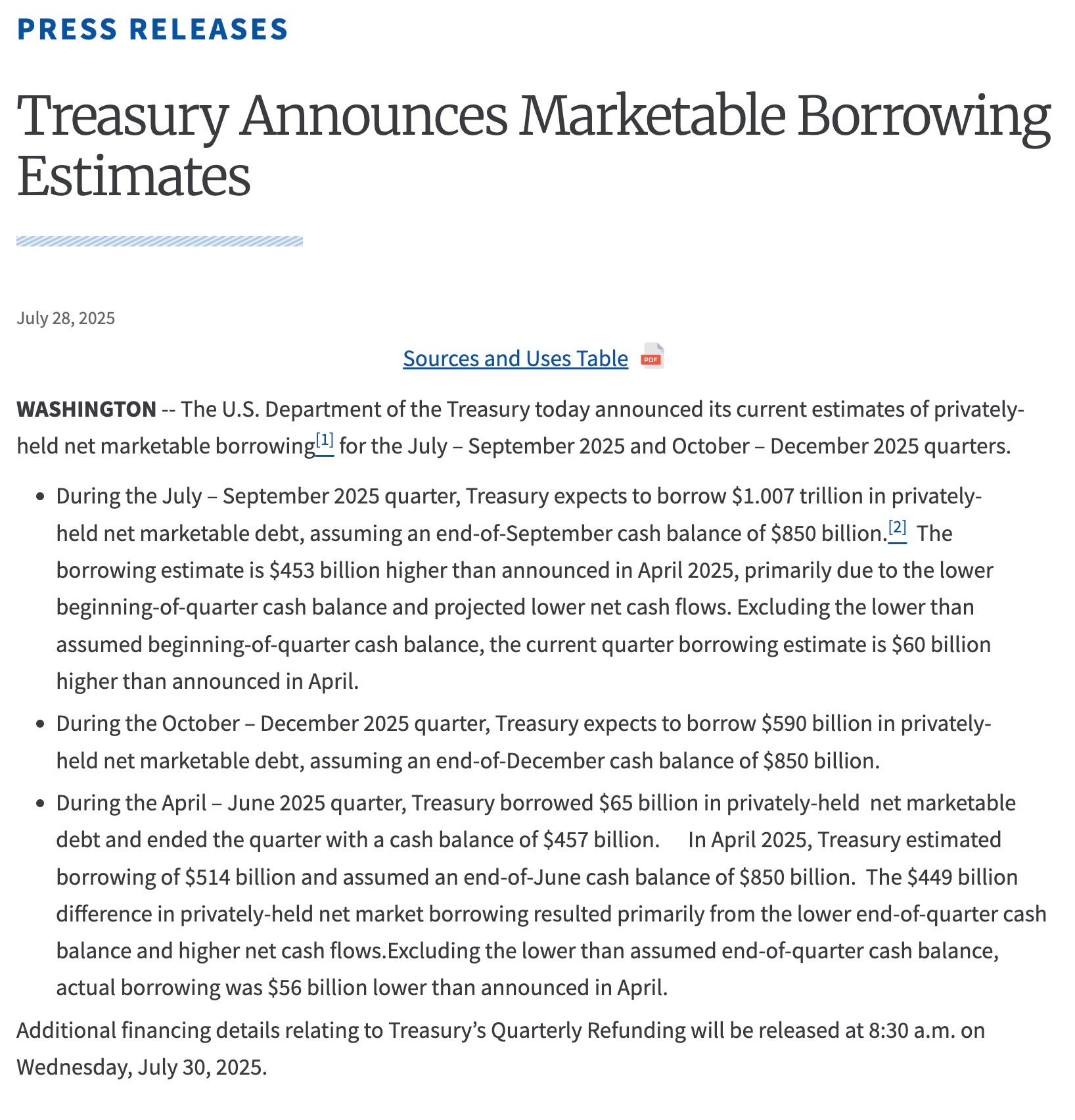
So, on a hot August day in the summer of 1999– The Sixth Sense (“I see dead people”) was the #1 movie at the box office– the US Treasury Department issued a rather mundane statement that its “net market borrowing” for the July through September quarter that year was estimated at MINUS $11 billion.
In other words, the Treasury Department was paying down a small portion of the US national debt.
[QTR: Like a distant relic from eons ago, I had to dig up one of these press releases and see it in person. Because of course, it may never happen again. But here’s what one looks like.]
Fast forward 26 years and such a statement is almost unimaginable.
The Treasury Department routinely makes these announcements; typically, once each quarter, Treasury estimates its total net borrowings for each quarter, then updates those estimates throughout the year.
In April 2025, for example, the Treasury Department estimated that it would borrow a whopping $547 billion in the July-September quarter this year.
$547 billion is a ridiculous amount of money to borrow. And yet, barely three months later, they revised their estimate and said the US government would borrow $1.007 TRILLION for the July-September quarter.
It’s a difference of 84%… in the wrong direction.
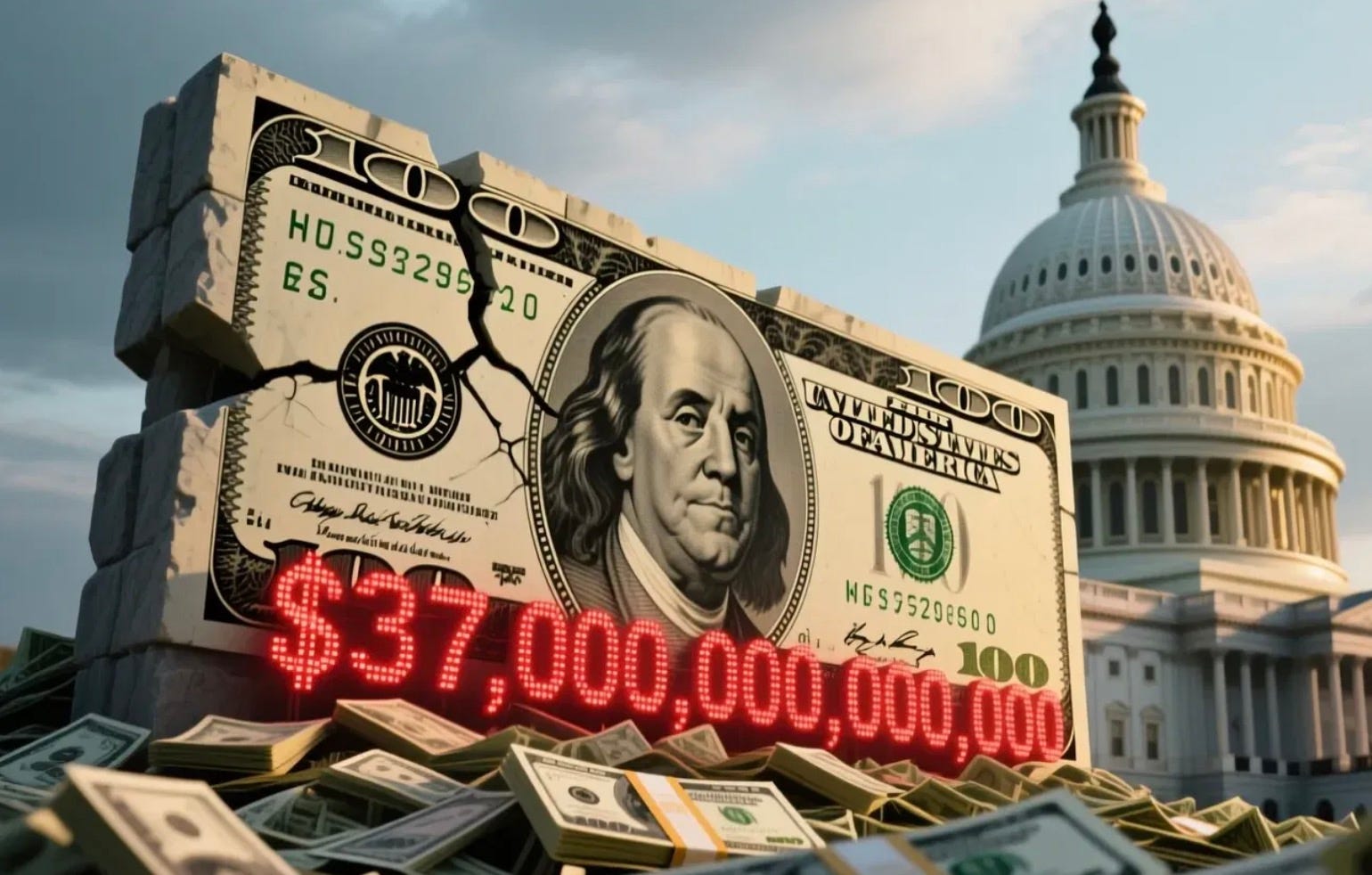
Now that the July-September quarter is over, we can see the actual amount that Treasury borrowed. And the answer is… $1.4 trillion. That’s 40% more debt than they estimated just three months ago, and nearly THREE TIMES as much as they estimated in April.
America’s debt is growing so quickly that it’s hard to even keep up anymore. The national debt breached $37 trillion on August 8, just over two months ago. Today it’s already $37.9 trillion, about to hit $38 trillion. So that’ll be roughly $1 trillion in just ~75 days or so.
This is a fiscal abomination, plain and simple.
Going back to 1999 when the government was actually paying it down, the US national debt was about $5.5 trillion. That’s an increase of $30+ trillion in 26 years.
What exactly did America get for that $30 trillion? Well, there was a very, very long and expensive war in Iraq and Afghanistan… which ended abruptly when Joe Biden decided to abandon tens of billions of dollars of military equipment to the Taliban.

There was an enormous bailout of the financial system in 2008. And then a historic series of bailouts and spending bonanzas during COVID.
But is the average American any better off? Is the US more secure, more powerful, more free, more affordable, more prosperous, and safer as a result of all that debt? I think the answer is clearly no. In fact, quite the opposite.
Despite $30+ trillion in debt, crime is far more rampant. Critical infrastructure is crumbling. Long-term inflation has made life largely unaffordable for the middle class. Housing prices are astronomical. Food prices are unrecognizable. New cars cost nearly as much as a small house used to. University can cost six figures annually.
And while medical care was never a bargain, it is now prohibitively expensive. Plus, insurance costs continue rising.
$30+ trillion should have been enough to do everything. And yet there is realistically nothing positive to show for that money. It also keeps getting worse.
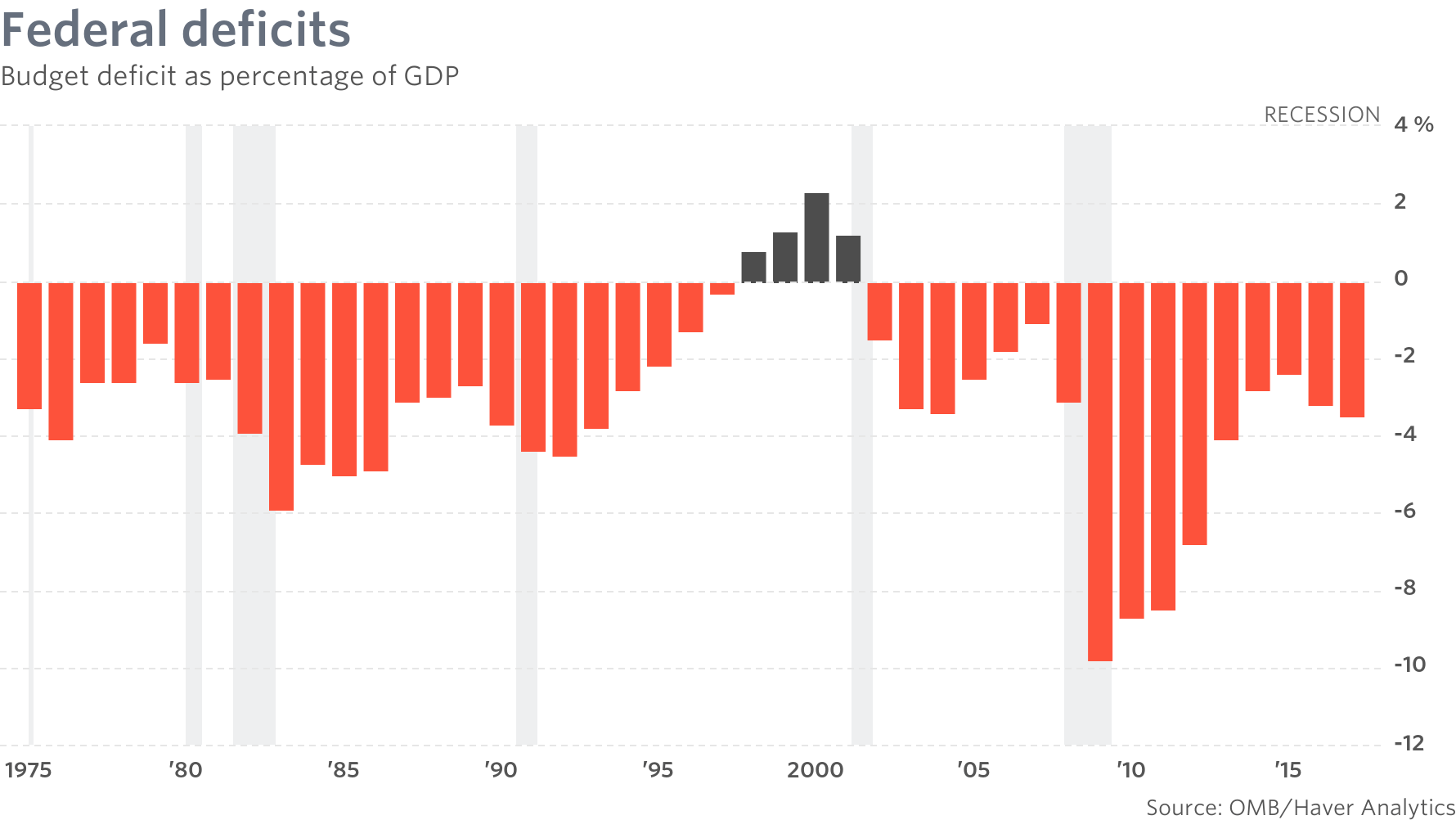
Fiscal Year 2025 just ended on September 30th. And while the full numbers from the Treasury Department haven’t been published yet (due to the government shutdown), the Congressional Budget Office estimates that net interest on the debt in FY25 surpassed $1 trillion– more than Medicare ($987 billion), Medicaid ($669 billion), and Defense spending ($869 billion).
Furthermore, the CBO estimates that interest payments on the national debt grew by 8% year-over-year, far outpacing growth in tax revenue and the US economy.
Social Security and Medicare spending– two of the other largest line items in the budget– are also growing at a nearly double-digit rate.
To say that this is all unsustainable is almost a joke at this point. It will come to an end, one way or another.
One option is that American voters elect representatives who understand the urgency and magnitude of this problem; and they work together to cut waste, substantially reduce the size and scope of government, and reform entitlement spending (especially Social Security and Medicare).
I’m not exactly holding my breath for that option. It’s incredible how some of the dumbest human beings alive manage to become Congressmen. They can’t even spell deficit let along understand the fiscal emergency.
The other option is that there will be a default. Not necessarily that the US defaults on its debt, but that it defaults on the promises– whether implied or explicit– that it made to voters.
Voters expect the US military to be well-equipped and ready to fight. They expect Social Security to be there for them at retirement. They expect to pay a reasonable amount of tax. They expect a basic, functioning government to provide essential services.
Unfortunately, the math just doesn’t add up. The US government simply doesn’t collect enough money to pay for all the things that it has promised.
For now, it makes up the difference by borrowing more money– roughly $2 trillion in Fiscal Year 25. But sooner or later that money is going to run out. In fact, it’s already happening.
Foreign investors– primarily governments and central banks– collectively used to be among the largest owners of US government debt. They believed in America, and it was a no-brainer to buy Treasury bonds.
But foreign ownership as a percentage of the national debt is falling quickly. Governments are diversifying rapidly, including selling their Treasury bonds (or redeeming them at maturity) and using the proceeds to buy gold.
It’s not because they’re ‘gold bugs’. It’s because gold is one of the only asset classes in the world that is universally accepted and has a truly global market. Plus, it’s a large enough market that it can absorb hundreds of billions of dollars in capital flows.
Gold has surged higher at an absurd pace over the past year, so, sure, there may be a temporary pullback.
But realistically the only thing that can stop its long-term ascent is the United States government suddenly getting a case of fiscal responsibility.
And you can make up your own mind whether or not that’s likely to happen.

QTR’s Disclaimer: Please read my full legal disclaimer on my About page here. This post represents my opinions only. In addition, please understand I am an idiot and often get things wrong and lose money. I may own or transact in any names mentioned in this piece at any time without warning. Contributor posts and aggregated posts have been hand selected by me, have not been fact checked and are the opinions of their authors. They are either submitted to QTR by their author, reprinted under a Creative Commons license with my best effort to uphold what the license asks, or with the permission of the author.
This is not a recommendation to buy or sell any stocks or securities, just my opinions. I often lose money on positions I trade/invest in. I may add any name mentioned in this article and sell any name mentioned in this piece at any time, without further warning. None of this is a solicitation to buy or sell securities. I may or may not own names I write about and are watching. Sometimes I’m bullish without owning things, sometimes I’m bearish and do own things. Just assume my positions could be exactly the opposite of what you think they are just in case. If I’m long I could quickly be short and vice versa. I won’t update my positions. All positions can change immediately as soon as I publish this, with or without notice and at any point I can be long, short or neutral on any position. You are on your own. Do not make decisions based on my blog. I exist on the fringe. If you see numbers and calculations of any sort, assume they are wrong and double check them. I failed Algebra in 8th grade and topped off my high school math accolades by getting a D- in remedial Calculus my senior year, before becoming an English major in college so I could bullshit my way through things easier.
The publisher does not guarantee the accuracy or completeness of the information provided in this page. These are not the opinions of any of my employers, partners, or associates. I did my best to be honest about my disclosures but can’t guarantee I am right; I write these posts after a couple beers sometimes. I edit after my posts are published because I’m impatient and lazy, so if you see a typo, check back in a half hour. Also, I just straight up get shit wrong a lot. I mention it twice because it’s that important.
When you give your credit card to some moron and say “do what thou wilt” you will end up with a huge bill and nothing to show for it. The fiat system is exactly that.
I could swear that SS and Medicare were taken out of my paycheck for many decades.
How is that an "entitlement"?
Where is this $$$$ now? Who "borrowed" it and never replaced it?
To do what with it? The "will of the people"? Doubt it.
If we had a truly free press, there would be millions protesting in front of the Capitol building asking these questions and asking who represents them since there is no Lobby for the electorate.