

By Stephen Weese, Foundation For Economic Education
When you think of self-driving cars, you may imagine scenes from a sci-fi movie, with sleek silver cars sliding perfectly into and out of the flow of traffic. Pedestrians simply express their desire for a car, and in moments one appears.
Just as easily, you might also think of media reports you’ve seen about crashes and other malfunctions of these vehicles in the recent past. You may even think of both and think that the sci-fi depiction is far-fetched and unlikely. The reality is actually simpler: self-driving cars are inevitable.
In the US, we love our cars. Nearly 92% of households have access to a motor vehicle. We have car shows, car racing, car dealerships everywhere, and even TV shows about cars. It’s an accepted part of our society. In a geographically expansive country like ours, cars are essential for many. Along with car culture, we also have a cultural acceptance of the dangers and even fatalities that come from car accidents. The US (human) accident rate is approximately 2,000 per million miles driven. Around 40,000 people are killed each year in auto accidents. Right now, hardly anyone talks about these deaths. There are few news articles, and it is generally accepted as the price of driving.
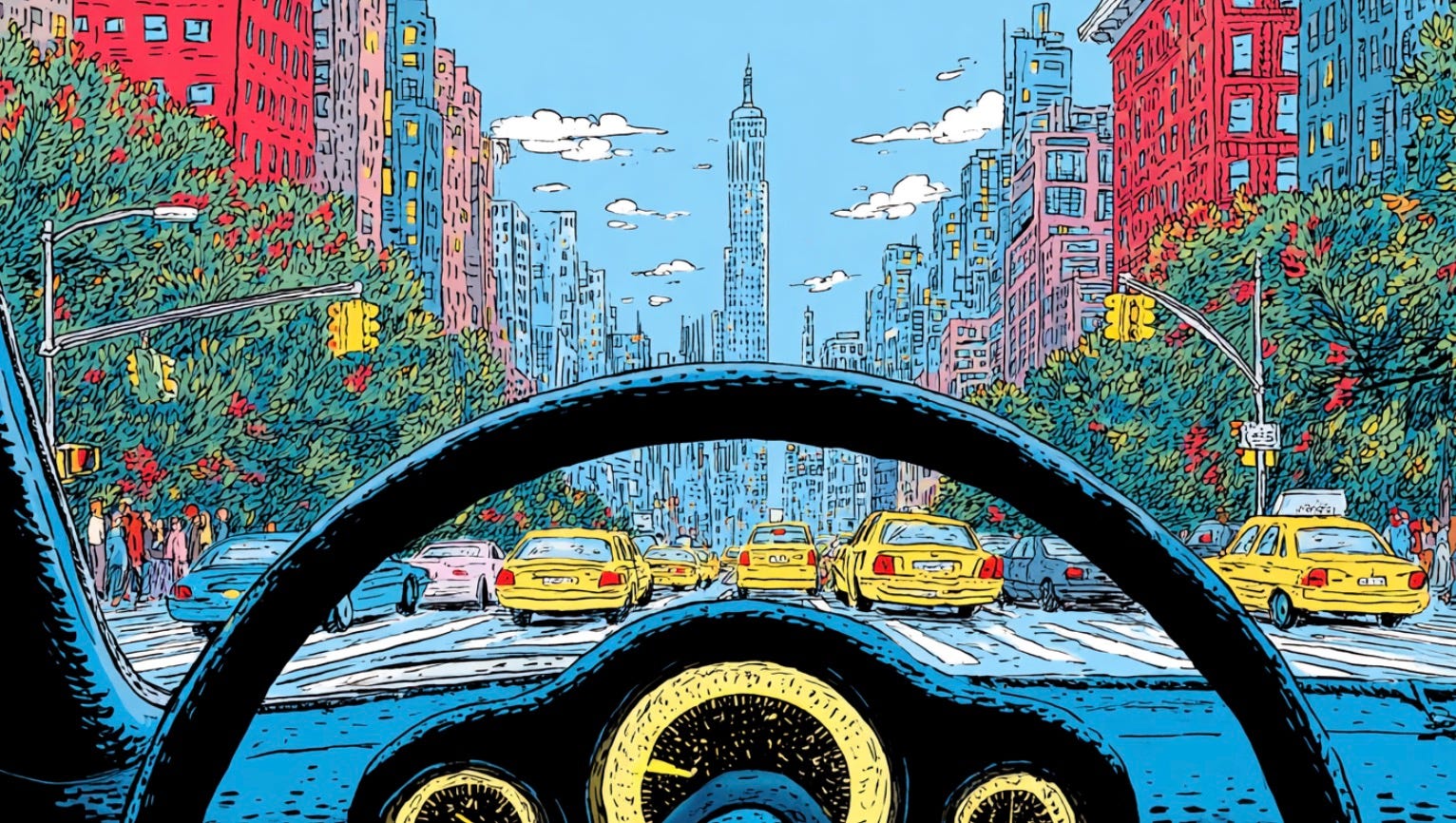
What if we could reduce the number of injuries and fatalities to 50% of what they are now? Or even further, what about 80%? Would it be worth it to switch to self-driving cars then? Interestingly enough, preliminary numbers from Waymo indicate that they already are 80% safer. The media rushes to report any accidents caused by these cars, which may give the impression that they are much more dangerous. The truth is, they actually promise a safer world for all.
Imagine a world with safe, self-driving cars. Mothers would feel more comfortable about their children. Parents’ dreadful fears about having a 16-year-old out on the streets would be almost completely relieved. People wouldn’t worry about the vision and dexterity loss of the elderly when they get into a vehicle. Drunk driving would be a thing of the past. Road rage would almost be eliminated—self-driving cars won’t cut off or tailgate other self-driving cars. Tens of thousands of lives would be saved per year, in the US alone.
Currently, most people do not realize that these autonomous vehicles are safer than a human driver. Concurrently, it is also not well understood that the performance of AI across most domains is growing at a staggering rate. This means that these cars that already outperform human drivers will keep getting better and better. At some point, it will be obvious that the best choice will be to give up our keys. Other factors will contribute to this as well; safety is only one of the reasons to switch.
For a while, there will be a mix of self-driving cars and manned vehicles on the road. As we move toward a majority of autonomous cars on the road, we will increasingly see the benefits:
Improved fuel efficiency
Reduced travel time
Ability to work or relax in the car
More pleasant commutes
No need for car ownership
Reduced insurance and liability
Autonomous vehicles will drive without being heavy on the gas pedal. They will be able to coordinate with other vehicles to have smooth lane changes and predict routes and congestion based on shared information. People going to work will simply step into a car and can relax with a coffee, start reading email, or even get a little extra sleep.
What’s more, with fleets of these cars on the roads, you won’t even need to own one. If you don’t own a car, there is no need for individual insurance; you’ll simply share a minor cost every time you ride. You can be tired or intoxicated and get right in. The blind and elderly and many others who have difficulty driving will now have the same option as everyone else. If you rent from a service, you never have to pay for parking.
Even if you own your own self-driving car, you can just have it go back home or park far away and then come pick you up when you’re done. No long walks to the car, no paying parking fees. Imagine this: no more parking tickets. While we’re at it: no more speeding tickets or traffic violations. Waymo and Tesla’s planned Robotaxi networks are already betting on this being our future. Uber is launching its own self-driving taxi service this year.
If there were 80% fewer accidents overall, it would save over 30,000 American lives per year. At some point, the benefits will far outweigh our desire to keep driving. Right now, these cars still have their challenges, such as difficult weather, construction zones, and complex urban environments, but it won’t be long until these challenges are solved. The real barriers are regulation and public sentiment. Once governments and the public realize the avalanche of benefits from these vehicles, the tipping point will occur, and we will begin our transition. Welcome to the future.

QTR’s Disclaimer: Please read my full legal disclaimer on my About page here. This post represents my opinions only. In addition, please understand I am an idiot and often get things wrong and lose money. I may own or transact in any names mentioned in this piece at any time without warning. Contributor posts and aggregated posts have been hand selected by me, have not been fact checked and are the opinions of their authors. They are either submitted to QTR by their author, reprinted under a Creative Commons license with my best effort to uphold what the license asks, or with the permission of the author.
This is not a recommendation to buy or sell any stocks or securities, just my opinions. I often lose money on positions I trade/invest in. I may add any name mentioned in this article and sell any name mentioned in this piece at any time, without further warning. None of this is a solicitation to buy or sell securities. I may or may not own names I write about and are watching. Sometimes I’m bullish without owning things, sometimes I’m bearish and do own things. Just assume my positions could be exactly the opposite of what you think they are just in case. If I’m long I could quickly be short and vice versa. I won’t update my positions. All positions can change immediately as soon as I publish this, with or without notice and at any point I can be long, short or neutral on any position. You are on your own. Do not make decisions based on my blog. I exist on the fringe. If you see numbers and calculations of any sort, assume they are wrong and double check them. I failed Algebra in 8th grade and topped off my high school math accolades by getting a D- in remedial Calculus my senior year, before becoming an English major in college so I could bullshit my way through things easier.
The publisher does not guarantee the accuracy or completeness of the information provided in this page. These are not the opinions of any of my employers, partners, or associates. I did my best to be honest about my disclosures but can’t guarantee I am right; I write these posts after a couple beers sometimes. I edit after my posts are published because I’m impatient and lazy, so if you see a typo, check back in a half hour. Also, I just straight up get shit wrong a lot. I mention it twice because it’s that important.
So cars as a service is the eventual final end state. Once private equity gets involved this will be significantly more expensive than owning your own car.
Furthermore if our tech leaders get a critical mass of these things on the road look forward to legislation forcing the public to transition to this solution. For safety reasons of course.
So everyone will be able to send their autonomous robot to work in a self-driving car. Freeing up 100% of their time for doomscrolling and social media. What a future!